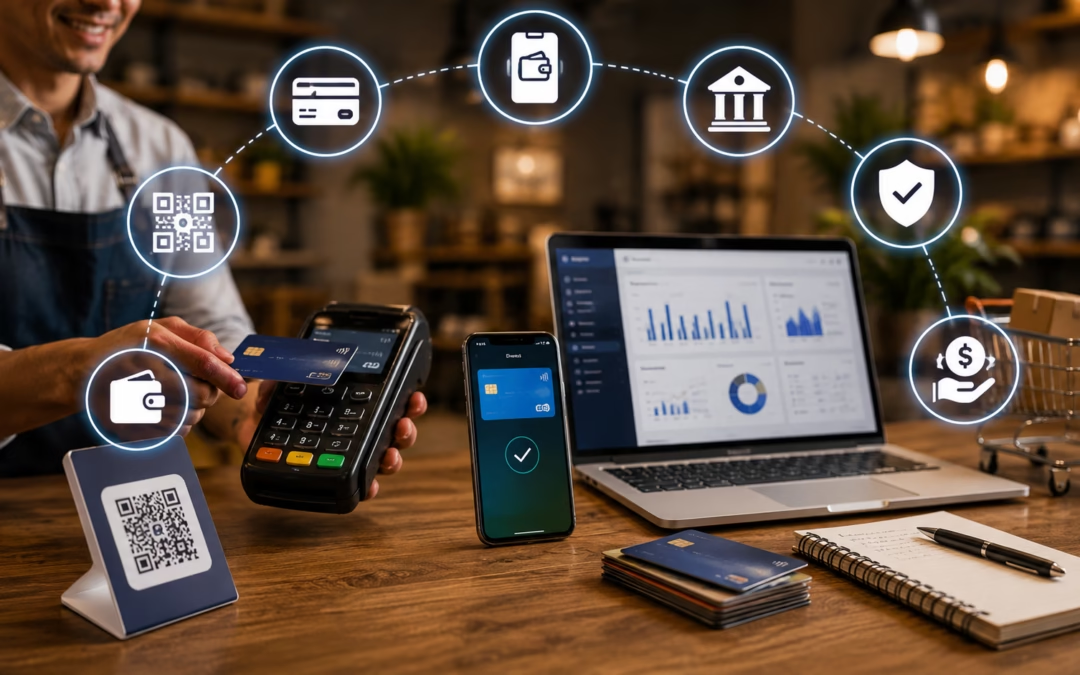
When it comes to getting paid, small businesses in 2026 must carefully choose the right mix of payment methods and options that align with customer expectations and business goals. The right payment stack not only simplifies transactions but also improves customer experience, speeds up cash flow, and boosts conversions.
So, how do you build a Modern Payment System without making your operations complex? In this guide, we’ll explore the best payment options and methods for small businesses in 2026 and how to choose what works best for you.
Payment Methods vs. Payment Options: What’s the Difference?
A payment method is the actual way funds are transferred from the customer to the business. Examples include credit cards, debit cards, UPI, digital wallets, and bank transfers.
A payment option, on the other hand, is the interface or format used to accept those methods. This includes online checkout pages, POS Machines, Remuneration links, QR codes, and invoicing systems.
Understanding this difference helps businesses build a flexible and efficient payment system.
Why Offering Multiple Payment Options Matters
1. Increased Conversions
Customers prefer flexibility. If their preferred method isn’t available, they may abandon the purchase. Offering options like UPI, cards, and wallets ensures higher checkout completion rates.
2. Better Customer Experience
A smooth and fast Remuneration process improves satisfaction and builds trust. Features like one-click checkout or QR payments make transactions effortless.
3. Faster Cash Flow
Digital payments reduce delays compared to traditional methods like checks. Faster settlements mean better liquidity for small businesses.
4. Reduced Late Payments
Payment links, automated reminders, and recurring billing help ensure customers pay on time without manual follow-ups.
5. Competitive Advantage
Businesses offering modern Solutions stand out. A seamless checkout experience can be the deciding factor for customers.
Best Payment Methods by Business Type
For Online Businesses
Credit & Debit Cards
Digital Wallets (Google Pay, PayPal)
BNPL (Buy Now Pay Later)
UPI & Bank Transfers
For Retail & In-Person Stores
Tap-to-Pay / Contactless
POS Card Machines
QR Code Payments
Cash
For Service-Based Businesses
Payment Links
Invoicing
Bank Transfers (UPI/ACH)
Recurring Billing
For Mobile-First Businesses
Digital Wallets
Saved Card Details
UPI Payments
Mobile-optimized checkout
How to Choose the Right Payment Mix
Step 1: Identify Your Sales Channels
Are you selling online, offline, or both? Your compensation setup should match your business model.
Step 2: Define Priorities
Focus on:
Cost efficiency
Speed of payouts
Customer preferences
Fraud protection
Step 3: Compare Payment Providers
Look for:
Transparent pricing
Easy integration
Strong security
Good customer support
Understanding Costs & Fees
Most digital payments come with processing fees. Here’s what to expect:
Credit Cards: 1.5%–3.5% per transaction
Debit Cards: Lower than credit cards
UPI: Often free or minimal charges
Wallets: Similar to card fees
BNPL: Higher fees due to credit risk
How to Reduce Costs
Promote low-cost methods like UPI
Optimize checkout to reduce failed payments
Negotiate rates with providers
Monitor hidden charges
Security & Fraud Prevention
Security is critical in 2026. Customers expect safe transactions.
Key Measures
PCI compliance
Tokenization
Secure payment gateways
Limited data access
Fraud Prevention Tools
OTP authentication
CVV & address checks
AI-based fraud detection
Transaction limits
Strong security not only protects your business but also builds long-term customer trust.
Common Mistakes to Avoid
1. Offering Too Few Options
Limited Remuneration methods can lead to lost sales.
2. Offering Too Many Options
Too many choices can overwhelm customers and slow down checkout.
3. Choosing the Wrong Payment Processor
A poor-fit provider can increase costs and reduce efficiency.
4. Lack of Transparency
Customers should clearly see available remuneration options before checkout.
Implementation Checklist
Set up a payment processor account
Choose key payment methods (UPI, cards, wallets)
Integrate checkout or POS system
Enable fraud protection tools
Test transactions before going live
Why Choose SelectivePay?
SelectivePay is a reliable payment solution designed to simplify transactions for small businesses in 2026. It offers seamless integration, multiple Payment Methods including cards, UPI, and digital wallets, along with advanced security features. With transparent pricing, fast settlements, and user-friendly tools, SelectivePay helps businesses improve cash flow, enhance customer experience, and scale operations efficiently.
Final Thoughts
In 2026, the best payment strategy for small businesses is all about flexibility, speed, and security. Customers expect seamless, fast, and reliable payment experiences across all channels. By offering the right mix of remuneration methods and options, you can improve customer satisfaction, increase revenue, and stay ahead of the competition. The key is to keep things simple, cost-effective, and aligned with how your customers prefer to pay.
Frequently Asked Questions (FAQs)
1. What is a payment method? Ans: It is the way customers transfer money, such as cards, UPI, or wallets.
2. What is a payment option? Ans: It is the interface used to accept payments, like POS systems or online checkout.
3. Why should small businesses offer multiple payment methods? Ans: To increase conversions and improve customer experience.
4. Which payment methods are best for online businesses? Ans: Cards, digital wallets, UPI, and BNPL options.
5. What payment options are ideal for retail stores? Ans: POS machines, QR codes, contactless payments, and cash.
In today’s digital economy, secure online transactions are no longer optional; they are essential. Whether you run an eCommerce store, SaaS platform, subscription business, or marketplace, choosing a payment gateway offered by a provider that can demonstrate current PCI DSS compliance can protect your customers’ financial data while improving trust and compliance. PCI DSS (Payment Card Industry Data Security Standard) is a globally recognized security framework designed to safeguard cardholder information and reduce payment fraud risks.
As cyber threats continue to rise in 2026, businesses are prioritizing gateways with advanced fraud detection, tokenization, encryption, and global compliance capabilities. Leading providers such as Stripe, PayPal, Adyen, Square, and Authorize.Net have become popular due to their strong security standards and flexible payment solutions.
What Makes a Payment Gateway PCI DSS Certified?
A PCI DSS-certified payment gateway follows strict security guidelines established by major card networks like Visa, Mastercard, American Express, Discover, and JCB. These standards include:
Encryption of cardholder data
Secure network architecture
Vulnerability monitoring
Access control systems
Fraud prevention tools
Regular security testing
Many modern gateways also provide tokenization and hosted payment pages that reduce a merchant’s PCI compliance burden. According to recent industry discussions, businesses prefer providers that handle sensitive payment data externally so merchants avoid storing card details themselves.
Top PCI DSS Certified Payment Gateways Compared
1. Stripe
Stripe is one of the most developer-friendly payment gateways available today. It is PCI DSS Level 1 certified, which is the highest level of certification in the payments industry. Stripe supports over 135 currencies and offers advanced APIs for custom payment experiences.
Key Features
AI-powered fraud detection with Stripe Radar
Subscription billing tools
Mobile wallet support
Global payment processing
Advanced developer APIs
Best For
SaaS companies, startups, marketplaces, and global eCommerce brands.
Pricing
Typically starts around 2.9% + $0.30 per transaction for online card payments.
Pros
Excellent API documentation
Fast integration
Strong global support
Scalable for enterprise growth
Cons
Account reviews can occasionally delay payouts for high-risk industries. Community discussions highlight that transparency in business operations helps reduce these issues.
2. PayPal
PayPal remains one of the most trusted payment gateways worldwide. Its PCI DSS-Compliant infrastructure and strong consumer trust make it ideal for businesses seeking fast setup and easy checkout experiences.
Key Features
One-click checkout
Venmo integration
Buyer and seller protection
International payments
Easy eCommerce integration
Best For
Small businesses, freelancers, and online stores targeting international customers.
Pricing
Around 2.89% + $0.29 for standard card transactions in many regions.
Pros
High customer trust
Quick onboarding
Supports multiple payment methods
Cons
Higher dispute rates
Limited customization compared to Stripe
3. Adyen
Adyen is a premium enterprise payment platform known for omnichannel payment solutions and advanced fraud prevention. Large global brands rely on Adyen because of its scalability and unified commerce tools.
Key Features
Unified online and in-store payments
Real-time fraud monitoring
Multi-currency support
Risk management tools
Enterprise-grade analytics
Best For
Large enterprises and multinational businesses.
Pricing
Custom interchange++ pricing based on transaction volume.
Pros
Excellent international capabilities
Strong compliance tools
Advanced reporting system
Cons
Complex onboarding
Better suited for high-volume merchants
4. Square
Square combines payment processing with POS systems, making it ideal for hybrid businesses operating both online and offline. Square maintains PCI DSS compliance while offering simple pricing and easy setup.
Key Features
Integrated POS system
Free online store builder
Inventory management
Contactless payments
Next-day payouts
Best For
Retail stores, restaurants, and SMBs.
Pricing
Usually around 2.6% + $0.10 for in-person payments.
Pros
User-friendly interface
Excellent hardware ecosystem
Fast onboarding
Cons
Limited international reach
Fewer advanced APIs
5. Authorize.Net
Authorize.Net is one of the oldest and most reliable PCI DSS-compliant payment gateways. Owned by Visa, it remains a trusted option for businesses requiring traditional merchant account setups.
Key Features
Advanced Fraud Detection Suite
Recurring billing
Customer information manager
ACH and eCheck support
Hosted payment forms
Best For
Established businesses need flexible merchant account integrations.
Pricing
Approximately a $25 monthly fee plus transaction charges.
Scalability: Choose a gateway that grows with your business.
Businesses handling high transaction volumes may benefit from enterprise platforms like Adyen, while startups often prefer Stripe due to flexibility and ease of development. Small retailers may find Square more practical because of its integrated POS ecosystem.
Why Work With Selective Pay?
Selective Pay helps merchants evaluate payment gateways, processors, and integrations based on how they accept payments, the systems they use, and their PCI DSS responsibilities. We can help configure hosted payment pages, tokenization, and other tools designed to reduce the amount of cardholder data handled directly by the merchant. Final PCI scope and validation requirements are determined by the merchant’s acquirer or payment brand.
Final Thoughts
PCI DSS-certified payment gateways ensure secure, compliant online transactions and build strong customer trust in 2026. Stripe is ideal for developers, PayPal for quick setup, Adyen for enterprises, Square for retail businesses, and Authorize.Net for reliable traditional processing. The right choice depends on business needs, transaction volume, and scalability, helping reduce fraud risks and improve customer confidence effectively.
Frequently Asked Questions (FAQs)
1. What is PCI DSS certification? Ans: PCI DSS certification is a global security standard that protects cardholder payment data during online transactions.
2. Why is a PCI DSS-certified payment gateway important? Ans: It helps reduce fraud risks, improves customer trust, and ensures secure payment processing.
3. Which payment gateway is best for startups in 2026? Ans: Stripe is often preferred by startups because of its flexible APIs and easy integration.
4. Which payment gateway is best for small businesses? Ans: PayPal and Square are popular choices for small businesses due to simple setup and user-friendly tools.
5. Does PCI DSS certification guarantee complete security? Ans: No, but it significantly improves payment security by following strict compliance standards and fraud prevention practices.
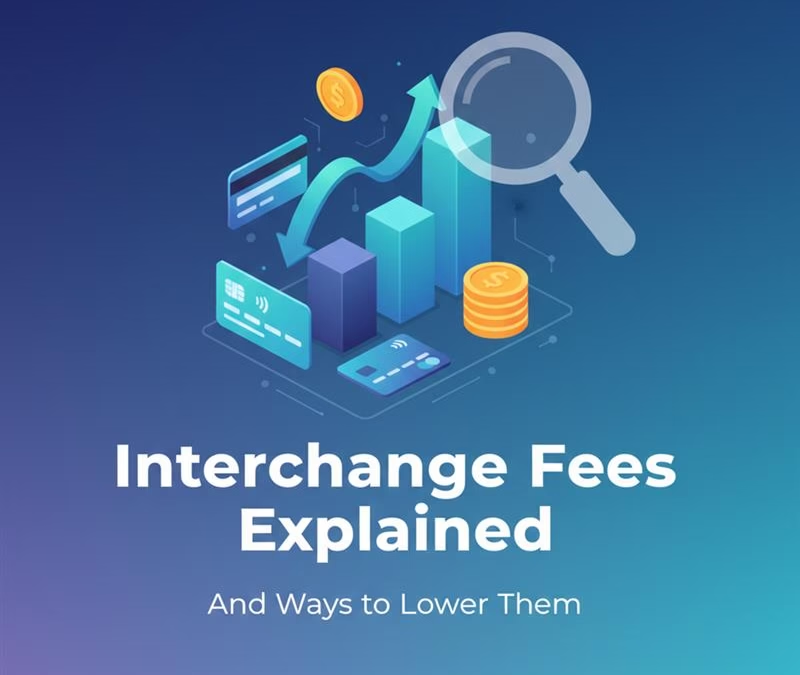
Interchange fees are one of those behind-the-scenes costs that impact almost every card payment made today. Whether you’re a small business owner, an e-Commerce seller, or simply someone curious about how payment systems work, understanding them can help you manage expenses and make smarter financial decisions.
In this blog, we’ll break down what Interchange Fees are, why they exist, and most importantly, practical ways to lower them.
What are Interchange Fees?
These are charges paid between banks during a card transaction. When a customer uses a debit or credit card to make a purchase, the merchant’s bank (also called the acquiring bank) pays a fee to the customer’s bank (the issuing bank).
In simple terms:
Customer pays with a card
Merchant receives payment
Merchant’s bank pays interchange to the customer’s bank
Merchant ultimately covers the cost
These fees are usually included in the total processing fees a business pays for accepting card payments.
Why Do Interchange Fees Exist?
It plays a key role in keeping the Payment Gateway ecosystem running smoothly. They help cover:
Fraud prevention and security measures
Costs of issuing cards to consumers
Reward programs like cashback and points
Risk of non-payment or chargebacks
Transaction handling and authorization
Without it, banks would have fewer incentives to provide credit card services or invest in payment security.
How Are Interchange Fees Calculated?
They are not fixed. They vary depending on several factors, such as:
1. Type of Card Used
Premium rewards cards often have higher interchange fees compared to basic debit cards.
2. Transaction Method
In-person chip transactions usually cost less
Online or keyed-in transactions cost more due to higher fraud risk
3. Business Industry
Some industries are considered higher risk and may have higher rates.
4. Transaction Size
Certain fees include both a percentage and a flat amount, such as:
1.8% + $0.10 per transaction
5. Card Network Rules
Visa, Mastercard, and other networks publish interchange rate tables that banks follow.
Why Interchange Fees Matter for Businesses
For merchants, interchange fees can significantly impact profit margins. Even small differences in rates add up over time.
Example:
If your business processes $100,000 per month in card sales, and interchange fees average 2%, you could be paying:
$2,000 per month or $24,000 per year
That’s money that could otherwise be invested in growth, staffing, or customer experience.
Ways to Lower Interchange Fees
The good news is that businesses can take steps to reduce costs. Here are some effective strategies:
1. Encourage Debit Card Payments
Debit cards generally have lower fees than credit cards, especially regulated debit cards.
You can encourage debit use by:
Offering small discounts for debit payments
Setting up signage at checkout
Providing low-cost payment options
Even shifting a portion of transactions from credit to debit can reduce overall fees.
2. Use EMV Chip and Contactless Payments
Card-present transactions are typically cheaper than card-not-present ones because they are less risky.
Make sure your business accepts:
Chip cards (EMV)
Tap-to-pay contactless cards
Mobile wallets like Apple Pay and Google Pay
These payment methods can lower fees and reduce fraud risk.
3. Optimize Your Payment Processing Setup
Not all processors price interchangeably the same way. Some offer:
Flat-rate pricing
Interchange-plus pricing
Tiered pricing
Interchange-plus is often the most transparent and cost-effective for growing businesses.
Review your statements regularly to ensure you’re not overpaying.
4. Reduce Manual Keyed-In Transactions
Keyed-in payments (typing card numbers manually) are treated as higher risk and often come with higher rates.
To reduce this:
Use card readers instead of manual entry
Implement secure online checkout systems
Encourage customers to use saved payment methods
5. Implement Address Verification and Security Tools
For online businesses, using fraud prevention tools can qualify you for lower interchange categories.
Helpful tools include:
AVS (Address Verification System)
CVV verification
3D Secure authentication
These reduce chargebacks and improve transaction approval rates.
6. Batch Transactions Correctly and On Time
Delaying settlement of transactions can increase fees. Payment networks may charge more if transactions are processed late.
Best practice:
Close out your batch daily
Avoid holding transactions for multiple days
Timely settlement helps keep rates lower.
7. Consider Surcharging or Cash Discount Programs (Where Legal)
Some businesses offset costs by:
Adding a small surcharge for credit card use
Offering discounts for cash payments
However, rules vary by country and card network, so compliance is essential before implementing these programs.
8. Work With a Payment Consultant or Specialist
If your business handles large volumes of card transactions, professional support can help uncover savings opportunities.
A specialist can:
Audit processing statements
Negotiate better rates
Ensure proper transaction coding
Recommend cost-saving payment strategies
Why Choose SelectivePay
SelectivePay is the ideal choice for businesses looking to reduce interchange fees and streamline their payment operations with ease. With advanced payment processing solutions, transparent pricing models, and secure transaction tools, it helps merchants optimize costs while ensuring smooth and reliable card acceptance. Whether you run a retail store or an e-Commerce business, it offers advanced support, fraud-prevention features, and expert guidance to improve approval rates and lower unnecessary processing expenses.
Final Thoughts
Interchange fees are a standard part of the card payment system, but they don’t have to be a burden. By understanding how they work and applying smart strategies, like encouraging e-Commerce payments, improving transaction security, and optimizing your processing setup, you can significantly reduce costs over time. Lower interchange fees mean higher margins, better cash flow, and more resources to grow your business.
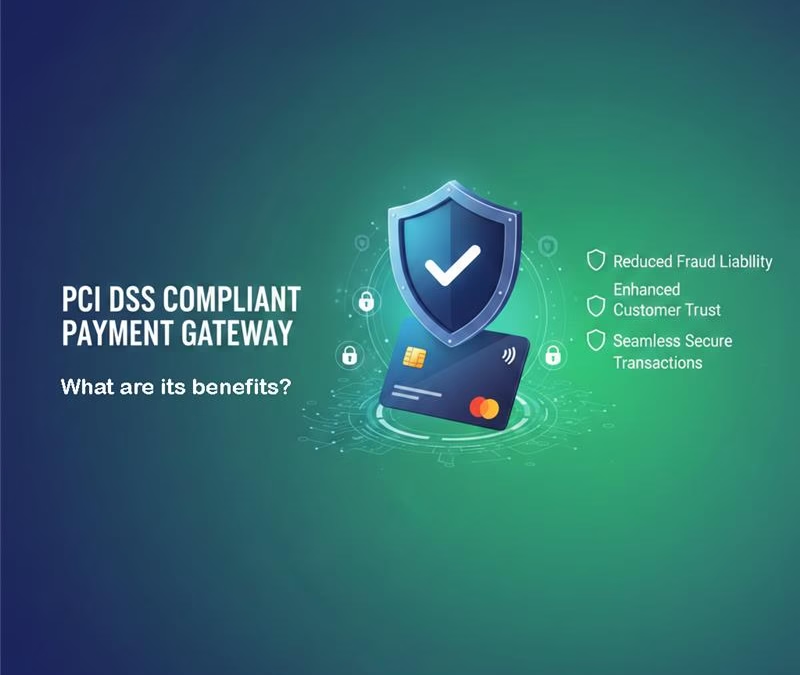
In today’s digital world, credit card and debit card payments are the backbone of online and offline commerce. But processing these payments requires more than just a card reader; it demands ironclad security to protect sensitive cardholder data. The Payment Card Industry Data Security Standard, or PCI DSS, is useful in this situation. PCI DSS is a globally recognized standard. It defines security requirements for any organization that stores, processes, or transmits cardholder data. This includes card numbers, expiration dates, and security codes.
A payment gateway that is PCI-certified, i.e., a PCI-compliant Payment Gateway with 24/7 Customer Support. It ensures that every transaction you accept is handled in full compliance with these standards. These include firewalls, data encryption, and access controls. It also includes vulnerability management, monitoring, and regular audits.
For any business, especially small or growing businesses, using a PCI DSS-compliant payment gateway isn’t optional. It’s essential for protecting customer data, building trust, and avoiding liability.
Why Small Businesses Should Use PCI Compliant Gateways
If you run a small business and want to know How to Accept Credit Card Payments, use a PCI-compliant payment gateway. This solution is secure and suitable for small enterprises. This is one of the best ways to accept payments safely and professionally. Here’s why:
Security and fraud prevention: The gateway encrypts card data during transmission. It anonymizes sensitive information. It also ensures that only authorized systems and people can access it. This dramatically reduces the risk of data breaches or fraudulent transactions.
Regulatory compliance and risk mitigation: By complying with PCI DSS, you protect yourself from potential penalties. You also reduce legal exposure and prevent reputational loss. These are major concerns if you store or process card data without proper safeguards.
Customer trust and brand credibility: When customers know their payment information is handled securely, they are more likely to trust your business. Customers tend to trust your business more. The environment should be certified. This trust is essential for repeat purchases and customer loyalty.
Global scalability and flexibility: PCI DSS is a widely accepted standard. A compliant gateway allows you to accept payments from customers anywhere. You don’t need to worry about global compliance variations.
Smooth, efficient payment processing: A PCI-compliant payment gateway is typically optimized for quick authorizations. It also provides streamlined checkout flows. This delivers a hassle-free payment experience for both merchants and customers.
The Added Value Features
If you’re exploring gateways like Selective Pay (or similar platforms), you can use features such as Selective Pay My Bill. You can also use a selective one-time payment. These features enhance flexibility and convenience for both merchants and customers.
Selective Pay My Bill enables recurring customers to easily pay outstanding invoices or bills. For example, clients of a subscription or membership-based small business can do so via a secure gateway. This reduces friction, boosts timely payments, and enhances user experience.
Selective One-time payment is ideal for one-off purchases or ad-hoc services. Customers who want to make a one-time payment aren’t forced into subscription models. They receive a simple, secure, and flexible checkout.
These features, when combined with PCI compliance, help small businesses to systematically scale payment collection. This applies to both recurring and one-time payments. They also ensure data security and compliance.
How to Accept Credit Card Payments for Small Business: Steps & Best Practices
If you are a small business owner ready to go digital, here’s a streamlined approach:
Choose a PCI-compliant payment gateway: Choose a provider that meets all PCI DSS requirements and offers features that fit your business model (e.g., recurring billing, one-time payments, invoices).
Integrate the payment gateway into your website or billing system: Many gateways provide hosted payment pages, SDKs, or plugins for e-commerce platforms. This helps offload sensitive payment data handling to the gateway rather than your own server.
Enable features like “selective pay my bill” or “one-time payment,” depending on whether you bill customers recurrently or occasionally. This adds flexibility and improves the payment experience.
Ensure ongoing compliance: PCI DSS compliance isn’t a “set and forget” affair. You need to maintain firewalls, encrypt data, update antivirus software, monitor access, and review security periodically.
Communicate security to customers: Make it clear that you use a PCI-compliant gateway to handle payments securely. This approach can enhance trust, reduce cart abandonment, and boost conversions.
The Business Case: Why This Is the Best Way for Small Businesses to Accept Payments
Given the growing adoption of digital payments worldwide, small businesses can no longer rely on cash alone. Accepting card payments via a PCI-compliant gateway is often the best way to meet customer expectations. It helps businesses stay secure, compliant, and efficient.
It reduces risk: Data breaches or payment fraud can cost far more in fines, lost business, or reputational damage. These costs are higher than what you invest in a proper gateway.
It builds trust: customers feel safer, more willing to share card details, and more likely to transact regularly.
It adds flexibility: you can support one-time payments, recurring billing, and invoicing, catering to a variety of business models.
It scales easily: as your business grows, the same gateway infrastructure can handle more payments, international transactions, and expanded operations.
Conclusion
In essence, using a PCI-compliant payment gateway is not just a technical or compliance formality. It’s a strategic business decision. This is especially true for small businesses. If you care about customer security, trust, and smooth operations, choose a gateway that meets global standards like PCI DSS. It should also support flexible features like Selective Pay My Bill and Selective One-Time Payment. This is among the most reliable and systematic ways to accept credit card payments. By adopting such a solution, you can scale confidently. You can avoid legal or security pitfalls. Offer your customers a seamless payment experience. Focus on growing your core business.