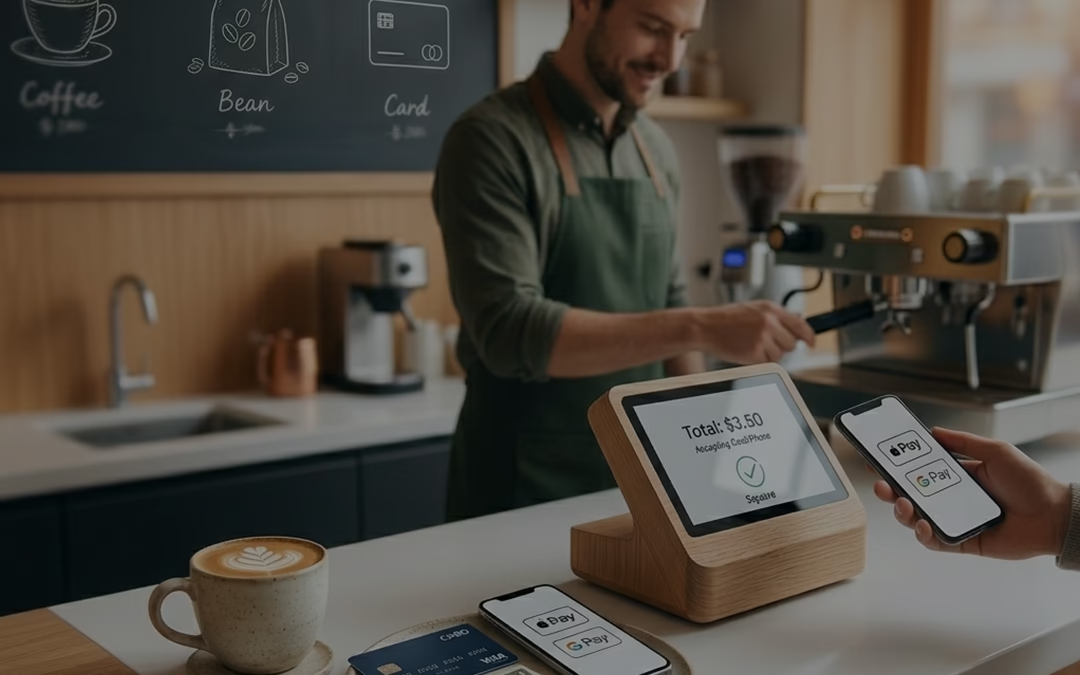
In today’s fast-paced digital world, every purchase you make, whether at a retail store, café, or online checkout, happens through a system known as POS. But what exactly does POS mean, and why is it so important for businesses?
If you’ve ever tapped your card, scanned a QR code, or paid through a mobile wallet, you’ve already experienced a Point-of-Sale (POS) Solution Transaction in action.
This guide will break down everything you need to know about POS systems, how they work, their types, and why they are essential for modern businesses.
What Is POS (Point of Sale)?
POS stands for Point of Sale, which is the place and moment where a customer completes a transaction by paying for goods or services.
It can be:
A physical checkout counter in a store
A card machine at a restaurant
A self-service kiosk
Or even an online checkout page
In simple terms, it is where money changes hands and a sale is finalised.
What Is a POS System?
It is a combination of hardware and software that businesses use to process transactions, manage sales, and track operations.
Key Components of a POS System
1. Hardware:
Card reader or payment terminal
Barcode scanner
Receipt printer
Cash register or drawer
2. Software:
Sales tracking
Inventory management
Customer data storage
Reporting and analytics
Modern Point-Of-Sale Systems have replaced traditional cash registers with smart, cloud-based solutions that streamline business operations.
What Is a POS Transaction?
It is the final step in a purchase process, where payment is made, and the sale is completed.
This transaction can happen through:
Debit or credit cards
Cash payments
Mobile wallets (UPI, Apple Pay, etc.)
Contactless tap payments
It acts as the bridge between the customer and the business, ensuring secure and smooth payment processing.
How Does a POS System Work?
Here’s a simple step-by-step breakdown of how it works:
Product Selection: Items are scanned or added to the system.
Price Calculation: The system calculates the total cost, including taxes and discounts.
Payment Method Selection: Customer chooses how to pay.
Payment Processing: The system connects with a payment processor.
Transaction Completion: Receipt is generated, and inventory is updated.
This entire process happens in seconds, making transactions fast and efficient.
Types of POS Systems
It has evolved significantly over time. Here are the most common types:
1. Traditional POS Systems
These are fixed systems usually found in retail stores with computers, cash registers, and barcode scanners.
2. Cloud-Based POS Systems
These systems store data online, allowing business owners to access reports and manage operations from anywhere.
3. Mobile POS (mPOS)
Mobile POS systems use smartphones or tablets, making them ideal for small businesses, pop-ups, and events.
4. Self-Service Kiosks
Common in fast-food chains and airports, customers can place orders and pay independently. From small startups to major corporations, each category serves distinct business demands.
Benefits of POS Systems
They offer more than just Payment Processing. Here’s why businesses rely on them:
1. Faster Transactions
Speed is crucial in customer experience, and POS systems ensure quick checkouts.
2. Real-Time Inventory Tracking
Every sale automatically updates inventory, reducing errors and stock issues.
3. Better Sales Insights
Businesses are able to monitor performance, examine patterns, and make data-driven choices.
4. Multiple Payment Options
It supports cash, cards, and digital payments, improving customer convenience.
5. Secure Transactions
Modern systems use encryption and authentication to ensure safe payments.
POS in Different Industries
They are used across multiple industries, including:
Retail Stores: Billing and inventory management
Restaurants & cafés: Order processing and table management
E-commerce: Online checkout systems
Salons & spas: Appointment and payment management
Events & ticketing: Seamless booking and payments
This versatility makes it a core component of modern business operations.
Why POS Systems Matter Today
The global POS market is growing rapidly as businesses move toward digital and contactless payments. Modern Point-of-Sale systems are no longer just payment tools; they are complete Business Management Solutions.
Understanding it is essential for anyone involved in business or commerce. Whether you’re a small business owner or a large enterprise, a reliable system can transform the way you manage sales and interact with customers. From processing payments to tracking inventory and analysing data, it plays a critical role in driving business success. As technology continues to evolve, it will only become smarter, faster, and more integrated, making transactions smoother than ever before.
In today’s competitive business landscape, pricing strategies play a crucial role in shaping customer perception and satisfaction. One such strategy gaining traction across industries is Dual Pricing. While it may sound complex at first, it is a simple yet effective model that benefits both businesses and customers. But the real question is, how does it enhance the Consumer experience? Let’s break it down in a clear, practical way.
What is Dual Pricing?
It is a system where businesses offer two different prices for the same product or service, depending on the payment method. Typically, Consumers pay a lower price when using cash and a slightly higher price when paying with credit or debit cards.
This model helps businesses offset payment processing fees while giving Consumers the freedom to choose how they want to pay.
1. Promotes Transparency in Pricing
One of the biggest ways it enhances the customer experience is through clear and honest costing.
Instead of hiding transaction fees within product prices, businesses openly display both pricing options. This transparency builds trust because consumers understand exactly what they’re paying for and why.
Consumers today value honesty. When they see a business being upfront about costs, it creates a sense of reliability and fairness.
2. Gives Customers More Control
It empowers Consumers by putting the choice in their hands.
Rather than forcing everyone to absorb card processing fees, customers can decide:
Pay less with cash
Or use the convenience of cards at a slightly higher cost
This flexibility enhances the overall experience because Consumers feel they are in control of their spending decisions.
In a world where personalisation is key, even small choices like this can significantly improve satisfaction.
3. Encourages Cost Savings
Everyone loves saving money. It directly supports this by offering instant savings for cash payments.
For price-sensitive customers, this becomes a strong incentive. Even small discounts can influence purchasing decisions and create a more positive buying experience.
Over time, Consumers begin to associate the brand with value and affordability, which increases loyalty.
4. Reduces Hidden Fees Frustration
Traditional pricing models often include hidden costs; Consumers unknowingly pay more because businesses have already added transaction fees into product prices.
It eliminates this frustration by:
Separating the actual product cost
Clearly showing the additional fee for card usage
This clarity prevents the feeling of being overcharged, which is a common pain point in customer journeys.
5. Enhances Perceived Fairness
Fairness is a key driver of Consumer Satisfaction. With it, customers feel the pricing structure is more equitable.
Why? Because:
Cash-paying customers are not subsidising card users
Card users understand they are paying for convenience
This balanced approach ensures that each Consumer pays based on their chosen payment method, which feels fair and logical.
6. Improves Checkout Experience
Speed and simplicity at checkout are critical for a positive customer experience.
It can streamline this by:
Reducing confusion about final costs
Making pricing predictable
Offering quick decision-making at payment
When Consumers know their options upfront, it minimises friction during checkout, leading to a smoother transaction process.
7. Builds Trust and Brand Loyalty
Trust is the foundation of long-term customer relationships. Businesses that adopt it often appear more consumer-centric and transparent.
Over time, this leads to:
Increased repeat purchases
Stronger emotional connection with the brand
Positive word-of-mouth referrals
Consumers appreciate businesses that give them choices instead of imposing hidden charges.
8. Aligns with Modern Consumer Behaviour
Today’s consumers are more informed and value-driven than ever before. They:
Compare prices
Look for transparency
Prefer flexible payment options
It aligns perfectly with these expectations. It reflects a modern, customer-first approach that resonates with today’s audience.
Many people are unaware that businesses pay fees for card transactions. By showing this difference, Consumers gain insight into:
How cost works
The real cost of convenience
This awareness creates a more informed consumer base, which enhances overall trust and understanding.
10. Creates a Win-Win Situation
Perhaps the biggest advantage of it is that it benefits both sides:
For Businesses:
Reduced processing costs
Improved profit margins
Greater cost flexibility
For Customers:
More payment options
Opportunities to save money
Transparent pricing
When both parties benefit, the overall experience becomes more positive and sustainable.
Final Thoughts
Dual pricing is more than just a strategy; it’s a customer experience enhancer. By offering transparency, flexibility, and fairness, it addresses many common frustrations associated with traditional models. In an era where customer expectations are constantly evolving, businesses that adopt this position position themselves as honest, adaptable, and customer-focused. Ultimately, it transforms a simple transaction into a more empowering and satisfying experience, and that’s what modern Consumers truly value.
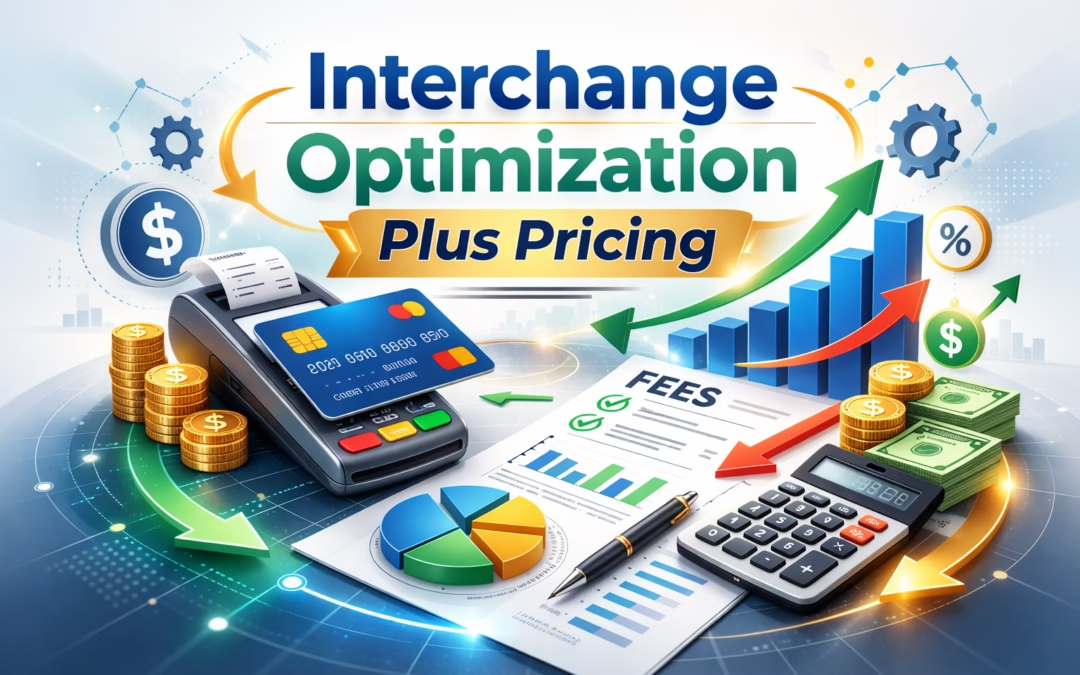
Payment processing fees can significantly impact a business’s profitability. Many companies accept credit and debit card payments daily, yet few fully understand how pricing models affect their costs. One of the most transparent and cost-effective pricing structures used in payment processing today is Interchange Optimization Plus Pricing to reduce transaction costs. This article explains what it means, how it works, and why it matters for businesses.
What Is Interchange Plus Pricing?
Interchange Plus Pricing is a payment processing model where businesses pay the actual fee set by card networks plus a fixed markup from the payment processor. The Interchange Fee is the cost charged by the bank that issued the customer’s card, while the “plus” portion represents the payment processor’s service fee.
For example, if the fee for a transaction is 1.8% and the processor markup is 0.3%, the total processing fee becomes 2.1% plus a small per-transaction cost. Unlike flat-rate pricing models, it clearly separates each cost component. Merchants are better able to comprehend exactly what they are spending for each transaction because of this transparency.
Understanding Interchange Fees
They are determined by credit card networks such as Visa, Mastercard, and other card associations. These costs change based on several variables, such as:
Type of card used (debit, credit, rewards card)
Transaction method (online, in-store, or mobile)
Business category
Security and authentication details
Typically, it ranges between 1% and 3% of the transaction value, although it can differ depending on the card and transaction type. These fees make up the largest portion of Payment Processing Costs, often representing about 80% of total card acceptance expenses. Because these are set by card networks, payment processors cannot change them. However, by interchange optimisation, companies can lower these expenses.
What Is Interchange Optimisation?
Interchange optimisation refers to the process of adjusting transaction data and payment processing methods to qualify for lower interchange rates.
Credit card networks categorise transactions into hundreds of interchange rate categories. By providing more detailed transaction information and following certain processing rules, businesses can qualify for the lowest possible rates.
For example, merchants may reduce their costs by:
Submitting Level II and Level III transaction data
Using secure payment gateways
Processing transactions quickly
Ensuring accurate billing information
Providing additional transaction details such as tax IDs, purchase order numbers, and customer codes can help merchants qualify for better categories. Businesses that successfully optimise these rates can often reduce payment processing costs by 20–40 basis points, which can result in significant savings at scale.
How Interchange Optimisation Plus Pricing Works
When it is combined with plus pricing, the result is a highly transparent and cost-efficient payment structure.
The process typically works as follows:
A customer makes a card payment.
The payment processor is used to process the transaction.
The processor passes the exact interchange fee from the card network.
A fixed markup (“plus”) is added by the processor.
Optimisation techniques help the transaction qualify for the lowest possible interchange category.
This model ensures businesses only pay the actual cost of the transaction plus a predictable processor fee.
Key Benefits for Businesses
1. Transparent Pricing
One of the biggest advantages of it is transparency. Businesses can clearly see how much they are paying in fees and how much goes to the payment processor.
This eliminates hidden charges that are common in tiered or bundled pricing models.
2. Lower Processing Costs
Because businesses pay the real rate instead of a blended fee, they often save money compared to flat-rate pricing structures.
Businesses with high transaction volumes especially benefit from this pricing model.
3. Better Cost Control
With itemised transaction data and predictable processor markups, companies can better forecast their payment processing expenses and manage their cash flow more effectively.
4. Improved Data Insights
It requires detailed transaction data, which also helps businesses gain deeper insights into their payment patterns and customer behaviour.
Potential Drawbacks
While interchange optimisation plus pricing offers many advantages, it also has a few challenges.
Complex Statements: Because each transaction includes separate fees, monthly statements may be longer and more technical than flat-rate pricing models.
Variable Costs: Since these fees vary depending on card types and transaction methods, the total processing cost may fluctuate from month to month.
However, many businesses consider these trade-offs worthwhile due to the transparency and savings this model offers.
Is Interchange Plus Pricing Right for Your Business?
It is particularly beneficial for:
Medium to high-volume merchants
B2B businesses processing large payments
Companies that want transparency in processing fees
Businesses using advanced payment gateways
Large merchants often prefer this model because it allows them to verify costs, negotiate processor markups, and optimise payment processing strategies. Small businesses can also benefit, but they should ensure they understand the structure of it before adopting it.
Conclusion
Interchange optimisation plus pricing is widely considered one of the most transparent and efficient payment processing models available today. By separating it from processor markups and using optimisation strategies, businesses gain greater visibility and control over their transaction costs. For companies processing a significant number of card payments, this approach can lead to meaningful savings, improved financial planning, and better insight into payment operations.
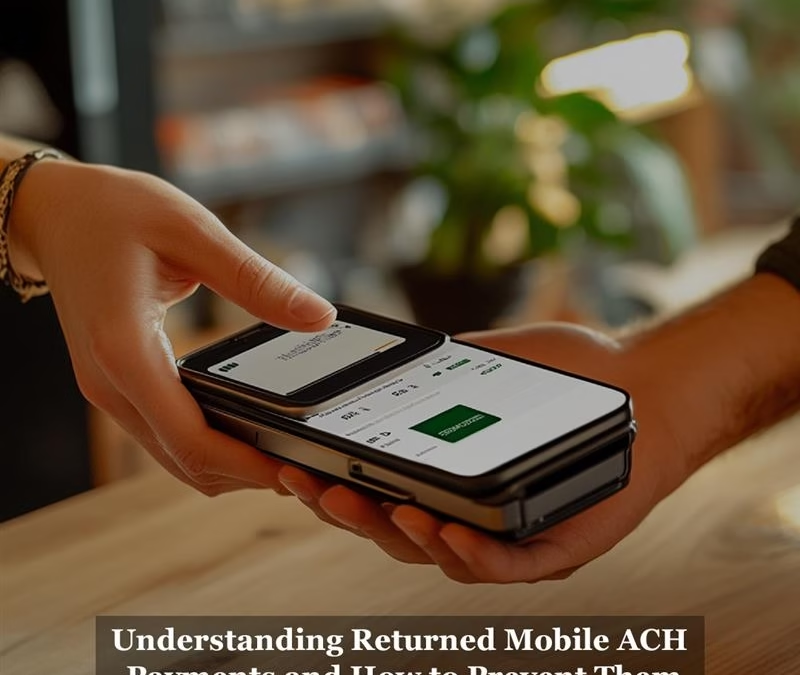
Digital payment systems have transformed how businesses and consumers move money. One widely used method is Automated Clearing House (ACH) Payments, which allow secure bank-to-bank transfers through mobile banking apps, online platforms, and billing systems. However, businesses sometimes face challenges when these transactions fail and are returned by the bank.
These failed transfers can affect revenue, create administrative complications, and even lead to penalties if they occur too often. This guide explains what ACH payment returns are, why they happen, and how businesses can reduce their chances of facing them.
What Is an ACH Payment Return?
An ACH payment return occurs when an electronic bank transfer initiated through a mobile app or online payment system fails and is sent back by the receiving bank. In simple terms, the transaction does not successfully move from the sender’s account to the recipient’s account.
Normally, ACH transactions follow a structured process:
A payment is initiated through a bank or payment platform.
The request is transmitted through the ACH network for processing.
The receiving bank reviews and verifies the transaction.
The funds are transferred into the recipient’s account.
If the bank detects an issue during verification, such as insufficient funds or incorrect account details, the transaction is rejected and returned to the sender. When this happens, a return code is generated that explains the reason for the failed transfer.
Why ACH Payments Are Popular
Even though payment returns occasionally occur, ACH transfers remain one of the most affordable and widely used electronic Payment Methods for businesses. They are commonly used for payroll deposits, subscription services, loan payments, and recurring bills. The ACH network processes billions of transactions every year and handles trillions of dollars in payments, making it a crucial part of modern digital finance. However, because these transactions are processed in batches and take time to settle, there is always a possibility that the transfer may not be completed successfully.
ACH transfers were first introduced in 1972, and since then the network has become a vital part of the U.S. financial system. Today, it processes over $76 trillion in transactions each year, making it one of the most important systems for electronic money transfers. Although standard ACH payments typically take several business days to complete, the introduction of Same Day ACH now allows individuals and businesses to send and receive payments within the same day.
Common Causes of ACH Payment Returns
Several factors can lead to transaction failures within the ACH network. Understanding these causes can help businesses reduce the chances of encountering them.
1. Insufficient Funds
One of the most common reasons for payment rejection is insufficient funds in the sender’s account. If the account balance cannot cover the transfer amount, the bank will decline the transaction.
This situation usually generates the R01 return code.
2. Incorrect Account or Routing Numbers
Entering incorrect banking information is another frequent cause of failed transactions. If the routing number or account number is invalid or does not match an existing account, the bank cannot process the request.
Even a minor typing error can result in a rejected transfer.
3. Closed or Frozen Accounts
If the account used for payment has been closed or temporarily frozen, the transfer cannot be completed. This typically results in return codes such as R02 or R03.
This issue often occurs when customers switch banks but forget to update their transaction details.
4. Unauthorized Transactions
Another reason for ACH returns arises when customers report that they did not authorize the transaction. If the bank determines that authorization was missing or revoked, the payment will be reversed.
Consumers usually have up to 60 days to report unauthorized ACH transactions.
5. Stop Payment Requests
Sometimes, account holders intentionally block a transaction through their bank. When a stop payment request is placed, the bank prevents the transfer from being processed and returns it.
How Long Does an ACH Return Take?
Most ACH transaction returns are processed within two business days after the receiving bank rejects the transfer.
However, returns related to unauthorized transactions may take longer, sometimes up to 60 days, depending on consumer protection policies.
For businesses, these delays can create cash-flow problems because the expected transaction never arrives.
The Impact of ACH Payment Returns on Businesses
Failed electronic Returned Mobile ACH Payments can create several operational and financial challenges for businesses.
Cash Flow Disruptions
Companies depend on consistent payments to maintain smooth operations. When a transaction fails, it can interrupt the expected flow of revenue.
Additional Fees
Banks and payment processors often charge fees for returned transactions. These charges can typically range from $25 to $35, depending on the financial institution.
Compliance Risks
Payment networks track return rates. If businesses exceed certain thresholds, they may receive warnings or face restrictions from their processors.
Customer Friction
Repeated transaction issues can lead to frustration for both businesses and their customers, potentially affecting long-term relationships.
How to Prevent ACH Payment Returns
Although transaction failures cannot be eliminated, businesses can significantly reduce their occurrence by implementing better payment practices.
1. Verify Banking Information
Always confirm account numbers and routing numbers before processing electronic transfers. Even a small error can cause a transaction to fail.
Many organizations now use bank verification tools or micro-deposit verification to ensure accuracy.
2. Communicate With Customers
If a transaction fails, contacting the customer quickly can help resolve the issue before another attempt is made.
Understanding the exact cause of the failure helps prevent repeated returns.
3. Wait for Payment Confirmation
Because ACH transfers take time to settle, businesses should avoid delivering high-value goods or services until the transaction has fully cleared.
This step reduces the risk of fraud and payment reversals.
4. Monitor Return Codes
Every failed ACH transfer includes a return code explaining why the transaction did not succeed.
Tracking these codes allows businesses to identify patterns such as frequent insufficient funds or incorrect account details.
5. Work With a Reliable Payment Processor
Partnering with a trusted Merchant Service provider can help businesses manage electronic payments more effectively. Many processors offer tools that reduce return rates, detect suspicious activity, and verify account information.
Final Thoughts
ACH payment returns are a normal part of digital transactions, but they can be managed effectively with the right strategies. By verifying banking information, monitoring transaction activity, and maintaining clear communication with customers, businesses can significantly reduce transaction failures. Taking a proactive approach to ACH management helps maintain steady cash flow, improves customer trust, and support more reliable financial operations in today’s digital environment.
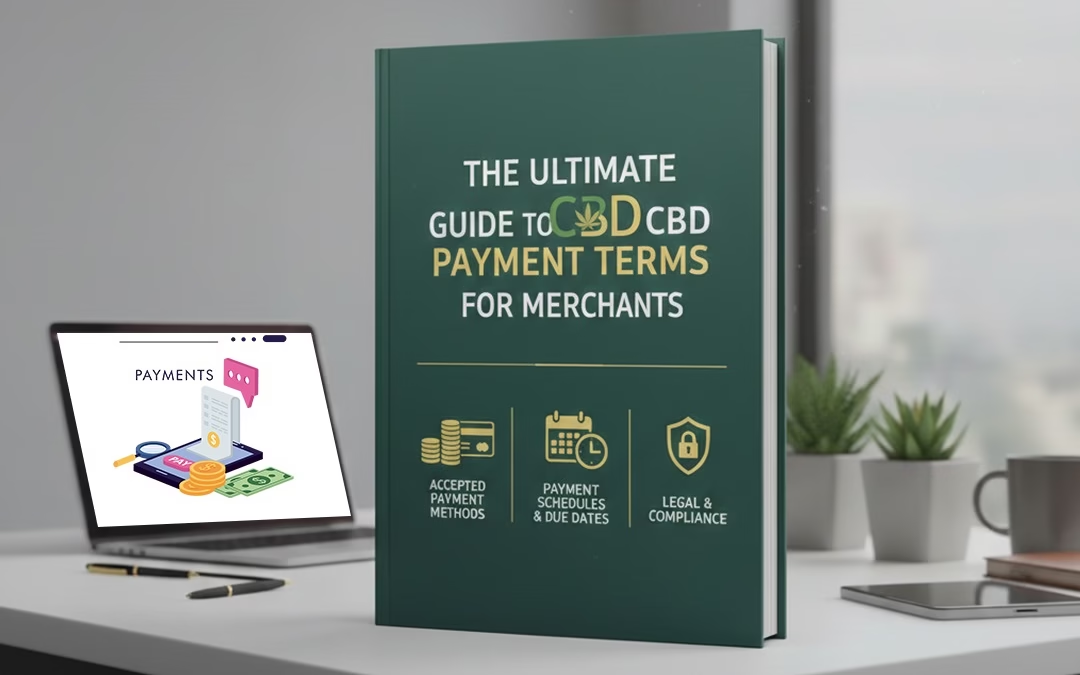
The CBD market is on the rise, with the global demand for CBD products increasing at a rapid pace as people look for natural wellness alternatives. One of the biggest problems that CBD merchants face, however, is understanding complex CBD Payment Terms. Because of the regulatory concerns, compliance issues, and risks involved, it is much different from regular e-commerce transactions. It is, therefore, crucial to understand these terms to ensure hassle-free transactions, minimize risks, and maintain a steady cash flow.
This ultimate guide will cover everything that merchants need to know about transaction terms, processing difficulties, charges, payment cycles, and compliance issues, as well as how to select the best payment service provider.
What Are CBD Payment Terms?
These terms refer to the terms and conditions under which merchants accept electronic transactions for their products. These terms include transaction charges, chargeback terms, rolling reserves, pay cycles, contract terms, and compliance requirements.
Because it is classified as a high-risk merchant, Payment Gateways have stricter terms to safeguard against regulatory issues, fraud, and chargebacks. This means that merchants are likely to experience higher costs and more stringent regulations than other businesses.
Why is CBD Considered High-Risk?
There are several reasons why merchants are considered high-risk, including:
Changes in regulations: These regulations vary from country to country and state to state.
Regulatory complexities: Merchants must comply with the FDA, the FDA equivalent, and the card network regulations.
Chargeback issues: Misinformation about its benefits can cause chargeback disputes.
Banking restrictions: Many banks are reluctant to process transactions.
These issues make merchants high-risk, leading to stricter transaction terms and increased scrutiny.
Key CBD Payment Terms Everu Merchants Must Be Aware Of
1. Transaction Fees
CBD transaction fees are higher than those of standard e-commerce businesses. These merchants pay between 3.5% and 6.5% per transaction, depending on risk level, volume, and geographic location.
2. Rolling Reserves
A rolling reserve is a percentage of sales that is held by the processor as a reserve for chargebacks and disputes. For merchants, rolling reserves usually range from 5% to 15% of sales, held for 90 to 180 days.
3. Chargeback Policies
These merchants have stricter chargeback monitoring. Exceeding acceptable levels can lead to penalties, account closure, or holds on funds. Keeping product descriptions and refund policies clear is vital.
4. Settlement Timeframes
Settlement times for these payments are longer than standard processing. Merchants can expect 2-7 business days for settlement, rather than same-day or next-day processing.
5. Contract Length
Merchant accounts of these have long-term contracts (6-36 months). Early contract termination may involve penalties, making contract review critical.
Compliance Requirement in CBD Payment Processing
Merchants of this must adhere to very strict legal and card network regulations, such as:
Third-party lab testing certificates (COA)
THC levels (below 0.3% in most areas)
Accurate product labeling
Clear disclaimers and medical claim restrictions
Age verification procedures
Non-compliance leads to merchant account closure or permanent account termination.
Non-compliance or high chargebacks may cause sudden account freezing.
3. High Processing Fees
Businesses incur higher fees due to regulatory risks.
4. Fewer Payment Gateways
Few payment gateways are available for CBD businesses.
How to Choose the Best CBD Payment Processor
Selecting the best payment processor is vital for a business. Here are some factors to consider:
1. CBD Industry Expertise
Select processors with experience in these merchant account processing.
2. Clear Pricing
No hidden fees or confusing reserve requirements.
3. Compliance Services
The best processors provide compliance services and risk management.
4. Multiple Payment Options
Ensure that the processor supports credit card, debit card, ACH, and other payment methods.
5. 24/7 Customer Support
24/7 technical and account support is necessary for a CBD business.
Best Practices to Optimize CBD Payment Terms
1. Minimize Chargebacks
Utilize descriptive product information
Establish clear refund and return policies
Offer prompt customer support
2. Ensure Regulatory Compliance
Keep up to date with the latest changes in regulations and card network rules.
3. Analyze Transaction Behavior
Fraud and dispute issues identified early can prevent account freezes.
4. Establish Processor Trust
Long-term reliability enables favorable fee structures and reduced reserves.
Future Outlook for CBD Payment Processing
The CBD industry is slowly but surely being accepted in markets around the world. As regulations become more defined and financial institutions become more confident, payment terms are likely to improve. Some of the trends that are expected to emerge in the future include:
Lower processing costs
Faster processing times
More payment gateway choices
Increased acceptance of crypto and alternative payments
Merchants who are in compliance and have good transaction records will be the ones who benefit most from these changes.
Conclusion
Understanding these terms for merchants is essential for establishing a stable, compliant, and profitable business. From payment fees and rolling reserves to compliance requirements and transaction cycles, every detail matters. By choosing the right payment processor, staying on top of regulatory requirements, and following best practices, merchants can overcome challenges and grow their business with confidence. As the industry matures, progressive merchants who adopt early will benefit from easier operations, lower risks, and greater profitability.