Running a retail store requires speed, efficiency, and reliability at every step of the customer journey. From the moment a customer walks into your store to the final checkout, every interaction plays a crucial role in shaping their experience. Whether you manage a boutique, electronics shop, clothing store, or a multi-location retail chain, having a fast, secure, andflexible Payment Processing Services is essential for smooth operations and increased sales.
At SelectivePay, we provide advanced Retail Merchant Services and Credit Card Processing Solutions designed specifically for modern retail businesses. Our goal is to help you accept payments seamlessly, reduce payment friction, prevent chargebacks, and create a better checkout experience for your customers, both in-store and online.
With evolving customer expectations and the rise of digital payments, retailers need a payment solution that keeps pace with technology while remaining easy to manage.
What We Offer Retail Businesses
Retail businesses face unique challenges such as high customer traffic, seasonal demand fluctuations, inventory management, and the need for quick transactions. Our retail payment processing solutions are built to handle these challenges while improving operational efficiency.
Retail Credit Card Processing
Accepting multiple payment methods is no longer optional; it’s a necessity. With our Retail Credit Card Processing Solutions, you can accept all major credit and debit cards with ease.
Our systems support multiple payment methods, including:
Chip card payments
Contactless tap payments
Magnetic stripe swipe
Mobile wallets such as Apple Pay and Google Pay
We also offer transparent pricing and competitive processing rates, helping retailers reduce costs while delivering a smooth payment experience.
Advanced Point-of-Sale (POS) Systems
A modern POS system does much more than process transactions. It acts as the central hub for your retail operations.
Our POS systems help retailers:
Process payments quickly
Track real-time inventory
Monitor daily sales and revenue
Manage product catalogs
Collect valuable customer insights
With an intuitive interface and easy integration, our POS solutions help retailers streamline operations while improving checkout efficiency.
Contactless & Mobile Payments
Customers today expect fast and convenient payment options. Long checkout lines can lead to frustration and lost sales.
Our contactless payment solutions allow retailers to accept:
Tap-to-pay cards
QR code payments
Mobile wallet transactions
Portable mobile card readers
This flexibility allows your business to provide a faster and safer checkout experience while meeting the expectations of modern shoppers.
eCommerce Payment Integration
Retail is no longer limited to physical stores. Many retailers now operate through a combination of brick-and-mortar stores and online platforms.
This allows retailers to manage both online and in-store Payments from a single system, creating a unified omnichannel experience for customers.
Gift Card & Loyalty Programs
Customer retention is just as important as acquiring new customers. Our Gift and Loyalty Card Programs help retailers increase repeat purchases and strengthen customer relationships.
With our solutions, you can:
Offer custom-branded gift cards
Create reward-based loyalty programs
Encourage repeat visits and higher spending
Track customer purchase behavior
These tools not only enhance the shopping experience but also help retailers build long-term brand loyalty.
Chargeback Prevention Tools
Fraud and payment disputes can negatively impact retail businesses. Chargebacks not only result in lost revenue but can also affect your payment processing reputation.
These tools help retailers reduce fraud risks and maintain secure payment environments.
24/7 Customer Support
Retail businesses operate beyond traditional business hours, and payment issues can occur at any time. That’s why we provide 24/7 US-based Customer Support.
Our experienced support team is always available to assist with:
Technical issues
Payment processing inquiries
POS troubleshooting
System setup and optimization
With reliable support, retailers can focus on running their business while we handle the payment infrastructure.
Why Retailers Choose Vecter
Retailers choose Vecter because our solutions are designed specifically for the retail environment.
Built for Retail
Every feature we provide is designed with retailers in mind. From inventory synchronization and real-time reporting to customer data insights, our systems help businesses operate more efficiently.
Simple Onboarding Process
Getting started with Vecter is quick and straightforward. We offer:
Guided setup and installation
Pre-configured payment terminals
Dedicated onboarding assistance
This ensures that your business can start accepting payments without delays.
Data-Driven Business Insights
Access to sales data is critical for making informed business decisions. Our systems provide Powerful Analytics Tools that allow retailers to:
Track product performance
Monitor peak sales hours
Identify customer buying patterns
These insights help retailers optimize pricing, inventory, and marketing strategies.
PCI-Compliant & Secure
Security is a top priority when it comes to payment processing. Our systems follow strict PCI Compliance Standards, ensuring that both your business and customer data remain protected.
We also implement advanced encryption and fraud prevention measures to safeguard every transaction.
Supporting All Types of Retail Businesses
Vecter proudly supports retailers across multiple industries. Whether you operate a small shop or a large retail chain, our solutions are designed to scale with your business.
We work with businesses such as:
Clothing & Apparel Stores
Electronics & Technology Retailers
Furniture & Home Goods Stores
Health & Beauty Retailers
Gift Shops & Boutiques
Sporting Goods & Hobby Stores
Bookstores & Specialty Shops
No matter your niche, our payment solutions help you accept payments reliably and improve operational efficiency.
Get Started with Retail Merchant Services That Work
The retail industry is evolving rapidly, and having the right payment processing system is essential for staying competitive. Whether you need Credit Card Processing for Retail, a modern POS system, or a unified online and in-store payment solution, Vecter has the expertise and technology to support your business. Our goal is to help retailers simplify payments, enhance customer experiences, and drive sustainable growth.
Digital payment systems have transformed how businesses and consumers move money. One widely used method is Automated Clearing House (ACH) Payments, which allow secure bank-to-bank transfers through mobile banking apps, online platforms, and billing systems. However, businesses sometimes face challenges when these transactions fail and are returned by the bank.
These failed transfers can affect revenue, create administrative complications, and even lead to penalties if they occur too often. This guide explains what ACH payment returns are, why they happen, and how businesses can reduce their chances of facing them.
What Is an ACH Payment Return?
An ACH payment return occurs when an electronic bank transfer initiated through a mobile app or online payment system fails and is sent back by the receiving bank. In simple terms, the transaction does not successfully move from the sender’s account to the recipient’s account.
Normally, ACH transactions follow a structured process:
A payment is initiated through a bank or payment platform.
The request is transmitted through the ACH network for processing.
The receiving bank reviews and verifies the transaction.
The funds are transferred into the recipient’s account.
If the bank detects an issue during verification, such as insufficient funds or incorrect account details, the transaction is rejected and returned to the sender. When this happens, a return code is generated that explains the reason for the failed transfer.
Why ACH Payments Are Popular
Even though payment returns occasionally occur, ACH transfers remain one of the most affordable and widely used electronic Payment Methods for businesses. They are commonly used for payroll deposits, subscription services, loan payments, and recurring bills. The ACH network processes billions of transactions every year and handles trillions of dollars in payments, making it a crucial part of modern digital finance. However, because these transactions are processed in batches and take time to settle, there is always a possibility that the transfer may not be completed successfully.
ACH transfers were first introduced in 1972, and since then the network has become a vital part of the U.S. financial system. Today, it processes over $76 trillion in transactions each year, making it one of the most important systems for electronic money transfers. Although standard ACH payments typically take several business days to complete, the introduction of Same Day ACH now allows individuals and businesses to send and receive payments within the same day.
Common Causes of ACH Payment Returns
Several factors can lead to transaction failures within the ACH network. Understanding these causes can help businesses reduce the chances of encountering them.
1. Insufficient Funds
One of the most common reasons for payment rejection is insufficient funds in the sender’s account. If the account balance cannot cover the transfer amount, the bank will decline the transaction.
This situation usually generates the R01 return code.
2. Incorrect Account or Routing Numbers
Entering incorrect banking information is another frequent cause of failed transactions. If the routing number or account number is invalid or does not match an existing account, the bank cannot process the request.
Even a minor typing error can result in a rejected transfer.
3. Closed or Frozen Accounts
If the account used for payment has been closed or temporarily frozen, the transfer cannot be completed. This typically results in return codes such as R02 or R03.
This issue often occurs when customers switch banks but forget to update their transaction details.
4. Unauthorized Transactions
Another reason for ACH returns arises when customers report that they did not authorize the transaction. If the bank determines that authorization was missing or revoked, the payment will be reversed.
Consumers usually have up to 60 days to report unauthorized ACH transactions.
5. Stop Payment Requests
Sometimes, account holders intentionally block a transaction through their bank. When a stop payment request is placed, the bank prevents the transfer from being processed and returns it.
How Long Does an ACH Return Take?
Most ACH transaction returns are processed within two business days after the receiving bank rejects the transfer.
However, returns related to unauthorized transactions may take longer, sometimes up to 60 days, depending on consumer protection policies.
For businesses, these delays can create cash-flow problems because the expected transaction never arrives.
The Impact of ACH Payment Returns on Businesses
Failed electronic Returned Mobile ACH Payments can create several operational and financial challenges for businesses.
Cash Flow Disruptions
Companies depend on consistent payments to maintain smooth operations. When a transaction fails, it can interrupt the expected flow of revenue.
Additional Fees
Banks and payment processors often charge fees for returned transactions. These charges can typically range from $25 to $35, depending on the financial institution.
Compliance Risks
Payment networks track return rates. If businesses exceed certain thresholds, they may receive warnings or face restrictions from their processors.
Customer Friction
Repeated transaction issues can lead to frustration for both businesses and their customers, potentially affecting long-term relationships.
How to Prevent ACH Payment Returns
Although transaction failures cannot be eliminated, businesses can significantly reduce their occurrence by implementing better payment practices.
1. Verify Banking Information
Always confirm account numbers and routing numbers before processing electronic transfers. Even a small error can cause a transaction to fail.
Many organizations now use bank verification tools or micro-deposit verification to ensure accuracy.
2. Communicate With Customers
If a transaction fails, contacting the customer quickly can help resolve the issue before another attempt is made.
Understanding the exact cause of the failure helps prevent repeated returns.
3. Wait for Payment Confirmation
Because ACH transfers take time to settle, businesses should avoid delivering high-value goods or services until the transaction has fully cleared.
This step reduces the risk of fraud and payment reversals.
4. Monitor Return Codes
Every failed ACH transfer includes a return code explaining why the transaction did not succeed.
Tracking these codes allows businesses to identify patterns such as frequent insufficient funds or incorrect account details.
5. Work With a Reliable Payment Processor
Partnering with a trusted Merchant Service provider can help businesses manage electronic payments more effectively. Many processors offer tools that reduce return rates, detect suspicious activity, and verify account information.
Final Thoughts
ACH payment returns are a normal part of digital transactions, but they can be managed effectively with the right strategies. By verifying banking information, monitoring transaction activity, and maintaining clear communication with customers, businesses can significantly reduce transaction failures. Taking a proactive approach to ACH management helps maintain steady cash flow, improves customer trust, and support more reliable financial operations in today’s digital environment.
In the modern digital economy, businesses need efficient payment processing to run smoothly. But not all businesses are treated the same way by banks and payment gateways. Some are labeled as “high risk,” which impacts their card payment processing, payment costs, and level of scrutiny. As the global e-commerce market grows and regulatory requirements change, understanding high-risk merchant accounts has become more relevant in 2026.
In this blog, we will discuss what High-Risk Merchant Accounts are, why businesses are labeled as high risk, the costs and difficulties associated with high-risk merchant accounts, and how businesses can mitigate them effectively.
What is a High-Risk Merchant Account?
A high-risk merchant account is a type of payment processing account that is made for businesses that are more prone to fraud, chargebacks, or regulatory issues. The account type enables businesses that are considered to be at high risk to process credit and debit card payments when other payment processors might not. The designation is usually based on the perceived fear of disputes, refunds, or financial difficulties that are associated with the nature of the business or the industry.
Since the fear of liability is higher, these accounts are usually associated with higher costs and more stringent terms than regular merchant accounts. Despite the name, it does not necessarily mean that the business is engaging in any form of malpractice. In most cases, it is simply a matter of the type of products or services that are being offered or the nature of the transactions, especially in the online or card-not-present model.
Why Businesses Are Considered High Risk
There is no central governing body that determines the risk levels; rather, payment processors have their own set of criteria. However, there are a number of factors that are commonly used to determine the risk level.
1. Industry Type: Some industries are naturally more prone to higher levels of scrutiny due to the potential for fraud or the complexity of laws. These include, but are not limited to, online gaming, adult entertainment, subscription-based services, cryptocurrency trading, travel services, and dietary supplement sales. Other industries, such as Tobacco Payment Processing, firearms, or forex trading, have also been historically identified due to regulatory or reputation-related issues.
2. Chargeback History: High levels of chargeback disputes can indicate a financial threat. A merchant with a chargeback ratio above 1% may be considered high risk due to potential financial liability to the processor.
3. Business Model Issues: Subscription-based services, free trial offers that convert to paid subscriptions, or large upfront payments can all be sources of chargeback disputes and, therefore, financial threats.
4. Geographic or Operational Issues: Merchants operating in areas with high rates of fraud or those that lack transaction history, such as new businesses with limited credit history, can also be considered it.
5. Transaction Issues: High-dollar transactions or irregular income streams can make chargebacks more expensive and unpredictable, further increasing financial threat.
Costs and Requirements in 2026
High-risk merchant accounts tend to have different financial and operational requirements compared to low-risk merchants.
1. Higher Processing Fees: Whereas standard merchant processing rates could be around 2-3%, merchant accounts could range from 2.5% to 5% or even higher, depending on the industry and the service provider. Chargeback fees could also be higher, ranging between $20 and $100 per chargeback, among other costs.
2. Rolling Reserves: The processor may also set aside 5-10% of the transaction amount for several months to account for any possible disputes, only to release the money later on a rolling basis.
3. Application Complexity: The application process could take days instead of minutes, and it could involve a lot of paperwork, such as bank statements or credit checks.
4. Volume Caps and Monitoring: The processor could set a monthly cap on the number of transactions or monitor the refund patterns to limit threats. All these are a result of the additional security measures that service providers must put in place to handle risks.
Industry Trends Shaping 2026
The following trends are currently affecting high-risk merchant processing:
1. Stronger Compliance Obligations: Security protocols such as PCI DSS are intended to minimize fraud risk, although widespread adoption has been slow, with only a third of companies being fully compliant in recent research. This increases the burden on merchants to prove the secure processing of payment information.
2. Growth of Alternative Payment Rails: Technologies such as blockchain-based payment settlement and stablecoins are being developed as alternative payment channels in certain sectors, providing faster settlement but requiring end-users to assume responsibility for dispute resolution and consumer protection.
3. Enhanced Monitoring and Fraud Solutions
Payment processors are increasingly using transaction analysis, monitoring, and fraud protection software to monitor merchants and minimize disputes.
How Businesses Can Manage Risk
Businesses in these industries can still thrive by taking a proactive approach to risk management:
Lower chargeback rates by being open with policies, using descriptive billing names, and providing good customer service.
Improve compliance with payment security standards and regulatory bodies.
Select experienced providers who have expertise in dealing with particular industries.
Keep good financial documentation to instill confidence during the underwriting and renewal processes.
By following these tips, businesses can increase their chances of approval, reduce fees in the long run, and develop long-term relationships with their processors.
Why Choose SelectivePay?
Selective Pay is the ideal choice for high-risk merchant account payments because it offers secure, reliable, and fully compliant payment processing solutions tailored specifically for high-risk industries. With advanced fraud prevention tools, fast approvals, high acceptance rates, and multi-currency processing, it helps businesses reduce chargebacks, minimize risk, and maximize revenue. Its flexible underwriting, transparent pricing, and dedicated account management ensure smooth onboarding and uninterrupted transactions, even for complex business models. By combining advanced technology with personalized support, Selective Pay empowers high-risk merchants to scale confidently, maintain compliance, and deliver seamless payment experiences to their customers.
Conclusion
High-risk merchant accounts are an important factor that allows businesses in challenging or new industries to take part in the global online economy. Although being labeled as high-risk incurs additional expenses, tight regulation, and difficulties, it also gives businesses access to the necessary Payment Processing infrastructure. In 2026, with the ever-changing nature of the online commerce industry, businesses need to have a clear understanding of how risk classification works and how to effectively manage it in order to achieve long-term success.
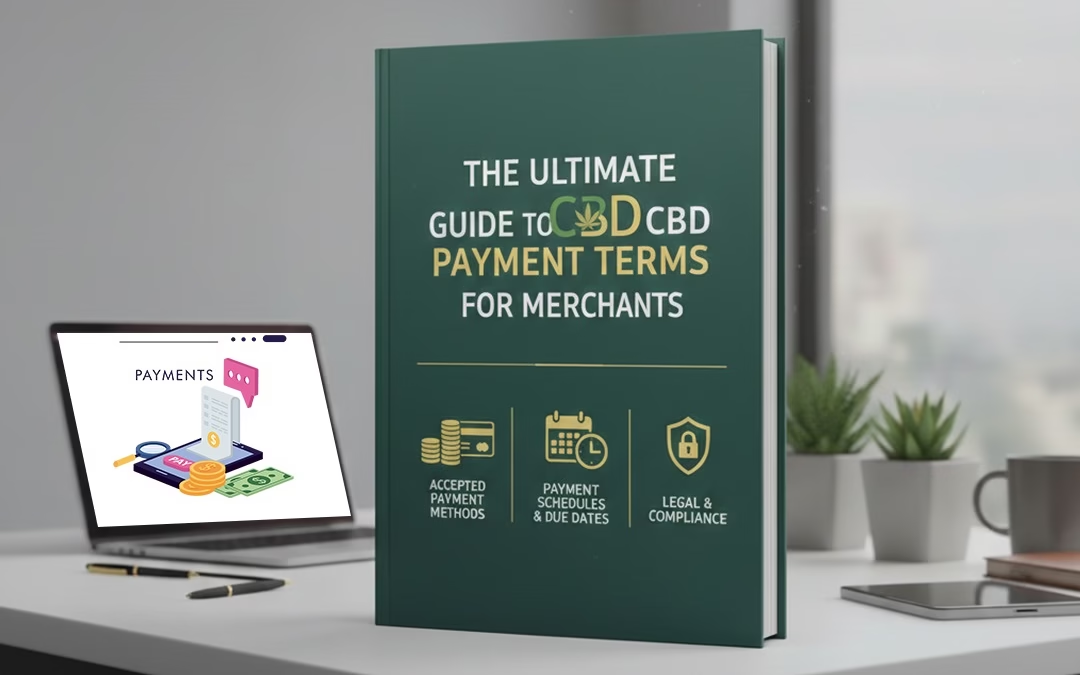
The CBD market is on the rise, with the global demand for CBD products increasing at a rapid pace as people look for natural wellness alternatives. One of the biggest problems that CBD merchants face, however, is understanding complex CBD Payment Terms. Because of the regulatory concerns, compliance issues, and risks involved, it is much different from regular e-commerce transactions. It is, therefore, crucial to understand these terms to ensure hassle-free transactions, minimize risks, and maintain a steady cash flow.
This ultimate guide will cover everything that merchants need to know about transaction terms, processing difficulties, charges, payment cycles, and compliance issues, as well as how to select the best payment service provider.
What Are CBD Payment Terms?
These terms refer to the terms and conditions under which merchants accept electronic transactions for their products. These terms include transaction charges, chargeback terms, rolling reserves, pay cycles, contract terms, and compliance requirements.
Because it is classified as a high-risk merchant, Payment Gateways have stricter terms to safeguard against regulatory issues, fraud, and chargebacks. This means that merchants are likely to experience higher costs and more stringent regulations than other businesses.
Why is CBD Considered High-Risk?
There are several reasons why merchants are considered high-risk, including:
Changes in regulations: These regulations vary from country to country and state to state.
Regulatory complexities: Merchants must comply with the FDA, the FDA equivalent, and the card network regulations.
Chargeback issues: Misinformation about its benefits can cause chargeback disputes.
Banking restrictions: Many banks are reluctant to process transactions.
These issues make merchants high-risk, leading to stricter transaction terms and increased scrutiny.
Key CBD Payment Terms Everu Merchants Must Be Aware Of
1. Transaction Fees
CBD transaction fees are higher than those of standard e-commerce businesses. These merchants pay between 3.5% and 6.5% per transaction, depending on risk level, volume, and geographic location.
2. Rolling Reserves
A rolling reserve is a percentage of sales that is held by the processor as a reserve for chargebacks and disputes. For merchants, rolling reserves usually range from 5% to 15% of sales, held for 90 to 180 days.
3. Chargeback Policies
These merchants have stricter chargeback monitoring. Exceeding acceptable levels can lead to penalties, account closure, or holds on funds. Keeping product descriptions and refund policies clear is vital.
4. Settlement Timeframes
Settlement times for these payments are longer than standard processing. Merchants can expect 2-7 business days for settlement, rather than same-day or next-day processing.
5. Contract Length
Merchant accounts of these have long-term contracts (6-36 months). Early contract termination may involve penalties, making contract review critical.
Compliance Requirement in CBD Payment Processing
Merchants of this must adhere to very strict legal and card network regulations, such as:
Third-party lab testing certificates (COA)
THC levels (below 0.3% in most areas)
Accurate product labeling
Clear disclaimers and medical claim restrictions
Age verification procedures
Non-compliance leads to merchant account closure or permanent account termination.
Non-compliance or high chargebacks may cause sudden account freezing.
3. High Processing Fees
Businesses incur higher fees due to regulatory risks.
4. Fewer Payment Gateways
Few payment gateways are available for CBD businesses.
How to Choose the Best CBD Payment Processor
Selecting the best payment processor is vital for a business. Here are some factors to consider:
1. CBD Industry Expertise
Select processors with experience in these merchant account processing.
2. Clear Pricing
No hidden fees or confusing reserve requirements.
3. Compliance Services
The best processors provide compliance services and risk management.
4. Multiple Payment Options
Ensure that the processor supports credit card, debit card, ACH, and other payment methods.
5. 24/7 Customer Support
24/7 technical and account support is necessary for a CBD business.
Best Practices to Optimize CBD Payment Terms
1. Minimize Chargebacks
Utilize descriptive product information
Establish clear refund and return policies
Offer prompt customer support
2. Ensure Regulatory Compliance
Keep up to date with the latest changes in regulations and card network rules.
3. Analyze Transaction Behavior
Fraud and dispute issues identified early can prevent account freezes.
4. Establish Processor Trust
Long-term reliability enables favorable fee structures and reduced reserves.
Future Outlook for CBD Payment Processing
The CBD industry is slowly but surely being accepted in markets around the world. As regulations become more defined and financial institutions become more confident, payment terms are likely to improve. Some of the trends that are expected to emerge in the future include:
Lower processing costs
Faster processing times
More payment gateway choices
Increased acceptance of crypto and alternative payments
Merchants who are in compliance and have good transaction records will be the ones who benefit most from these changes.
Conclusion
Understanding these terms for merchants is essential for establishing a stable, compliant, and profitable business. From payment fees and rolling reserves to compliance requirements and transaction cycles, every detail matters. By choosing the right payment processor, staying on top of regulatory requirements, and following best practices, merchants can overcome challenges and grow their business with confidence. As the industry matures, progressive merchants who adopt early will benefit from easier operations, lower risks, and greater profitability.
In today’s digital economy, online payment processing is no longer optional; it’s a core component of business success. Whether you run an eCommerce store, SaaS platform, or service-based business, choosing the right payment processor can impact customer experience, security, and profitability.
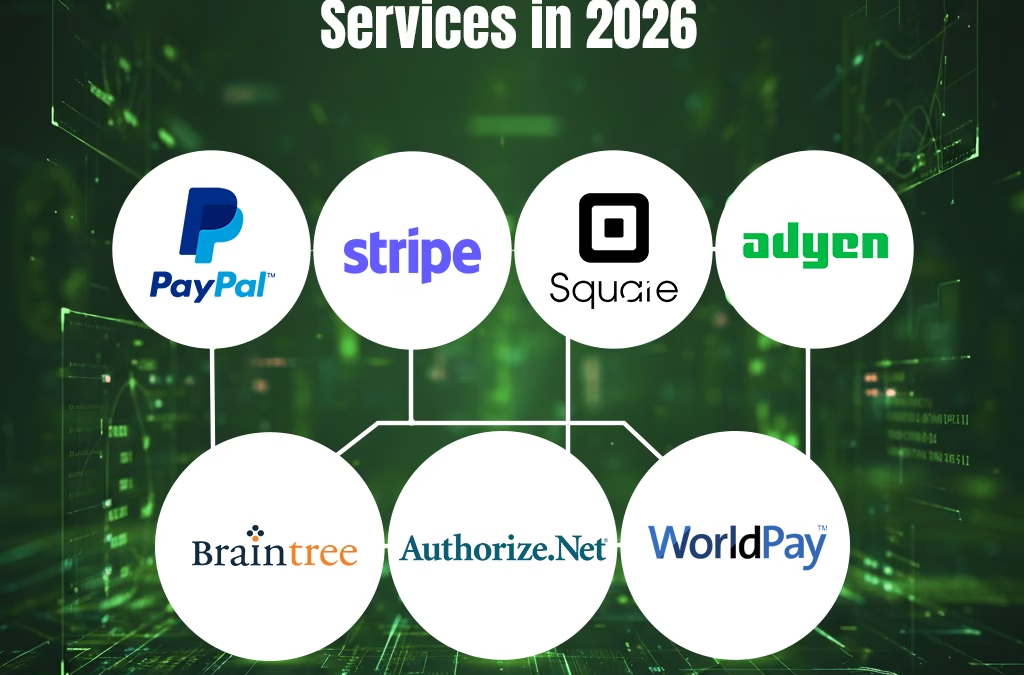
As payment technology evolves in 2026, businesses expect faster transactions, global reach, fraud protection, and seamless integrations. This blog explores 7 of the Best Online Payment Processing Services to consider this year.
1. Stripe
It remains one of the most flexible and developer-friendly payment processors available. It supports businesses of all sizes and offers extensive customization through APIs, making it ideal for startups and tech-driven companies. Stripe enables recurring billing, subscription management, multi-currency transactions, and strong fraud detection tools. Its scalability allows businesses to start small and expand without switching providers. For organizations handling large transaction volumes, negotiable pricing structures can also reduce costs, making it attractive for growth-focused companies.
Best for: SaaS companies, marketplaces, and custom-built platforms.
2. PayPal
It continues to dominate global recognition and trust among online shoppers. Its checkout experience is widely familiar, which can increase conversions and reduce cart abandonment. With support in numerous countries and currencies, PayPal Payment Gateway simplifies cross-border payments for businesses selling internationally.
The platform offers invoicing tools, subscription billing, and buyer protection features. However, its fee structure can sometimes be higher for certain transaction types, so businesses should review pricing carefully.
Best for: Small businesses, freelancers, and international sellers.
3. Square
It provides an all-in-one ecosystem combining payment processing, POS systems, and business management tools. Its straightforward pricing model and ease of use make it particularly attractive to small retailers and hybrid businesses that sell both online and offline. Beyond payments, Square includes inventory tracking, analytics, and customer engagement tools, giving businesses operational insights alongside transaction processing.
Best for: Retailers, restaurants, and omnichannel businesses.
4. Adyen
Adyen is a powerful enterprise-grade payment platform trusted by global brands. It provides unified commerce solutions, allowing businesses to accept payments across online, mobile, and in-store channels through a single infrastructure.
The platform supports numerous local payment methods worldwide and delivers advanced data insights to optimize authorization rates and customer experience. While it may be complex for smaller organizations, it’s ideal for scaling international operations.
Best for: Large enterprises and global brands.
5. Braintree
Owned by PayPal, Braintree offers a robust solution tailored to mobile apps and digital-first businesses. It supports credit cards, digital wallets, and recurring billing while providing developer-friendly tools for integration.
Braintree also allows businesses to manage multiple payment types within a unified interface, helping streamline customer checkout experiences. Its flexibility and mobile-first approach make it appealing for modern digital services.
Best for: Mobile apps and subscription-based platforms.
6. Authorize.Net
Authorize.Net is one of the longest-standing payment gateways and remains popular for its reliability and security features. It provides fraud detection tools, recurring billing, and customer information management capabilities.
Many small and medium businesses favor it due to its reputation and compatibility with numerous e-commerce platforms. While its interface may not be as modern as newer competitors, its stability and support make it dependable.
Best for: Established SMEs seeking a trusted solution.
7. Worldpay
Worldpay offers comprehensive payment solutions designed for businesses handling high transaction volumes. It supports multiple currencies and payment types, along with strong reporting and analytics capabilities.
Its global coverage and industry-specific solutions make it suitable for businesses looking to expand internationally or manage complex payment environments.
Best for: Large-scale merchants and international operations.
How to Choose the Right Payment Processor
Selecting the right service depends on your business model and growth strategy. Consider these factors:
Transaction Fees: Evaluate processing rates and hidden costs.
Global Reach: Ensure support for currencies and regions you serve.
Security: Look for fraud protection and compliance standards.
Integration: Confirm compatibility with your website or platform.
Scalability: Choose a system that grows with your business.
A startup may prioritize flexibility and low setup barriers, while an enterprise may need analytics and multi-channel support.
Conclusion
The best Online Payment Processing Service in 2026 depends on your specific business needs. Stripe leads in customization, PayPal in global trust, Square in simplicity, Adyen in enterprise solutions, Braintree in mobile integration, Authorize.Net in reliability, and Worldpay in large-scale operations.
By evaluating your transaction volume, customer base, and growth goals, you can select a processor that improves checkout experiences and strengthens financial performance. Investing time in the right choice today ensures smoother operations and customer satisfaction tomorrow.