In today’s digital-first economy, payment processing is the backbone of every successful business, whether you run an eCommerce store, SaaS platform, or brick-and-mortar shop. Before diving into the differences between front-end and back-end payment processing, it’s important first to understand what Payment Processing Services actually mean.
Simply put, it refers to the series of steps that enable a business to accept and complete transactions made through credit or debit cards, including authorisation and fund transfer.
Let’s break it down.
What Is Payment Processing?
It is the complete sequence of steps that allows businesses to accept electronic payments such as credit cards, debit cards, and digital wallets. It connects customers, merchants, banks, and payment networks to securely transfer funds.
From authorisation to settlement, the process takes just a few seconds but involves multiple systems working together behind the scenes.
What Is Front-End Payment Processing?
You’re operating a record store, and you’re about to make a sale of the latest hit album. You ring up the record, and the customer decides to pay with their credit card.
Once the customer inserts their card into your Point-Of-Sale System, their information gets routed from the merchant to the payment processor to verify the sale. This is front-end payment processing.
Key Functions:
Captures customer payment details
Encrypts sensitive data for security
Sends transaction data
Initiates authorization requests
In simple terms, front-end processing is the “face” of the transaction, everything the customer sees and interacts with.
Role of Payment Gateways
At the heart of front-end processing is the Payment Gateway. It acts as a secure bridge between the customer and the payment processor by encrypting data and ensuring safe transmission.
For example, when a customer clicks “Pay Now” on your website, the gateway instantly sends encrypted data for verification.
What Is Back-End Payment Processing?
It happens behind the scenes after the transaction is initiated.
It ensures the transaction is verified, approved, and completed successfully.
Key Functions:
Communicates with card networks (Visa, Mastercard, etc.)
Verifies funds with the issuing bank
Sends approval or decline response
Transfers funds to the merchant’s account
This stage involves multiple entities, such as issuing banks, acquiring banks, and payment networks, working together to complete the transaction.
In short, back-end processing is the “engine” that powers the transaction.
Front-End vs Back-End Payment Processing: Key Differences
Feature
Front-End Processing
Back-End Processing
Visibility
Customer-facing
Behind-the-scenes
Main Role
Data collection & initiation
Authorization & settlement
Key Tools
Payment gateway, POS
Banks, card networks
Speed
Instant (user interaction)
A few seconds for approval
Focus
User experience & security
Accuracy & fund transfer
How It Works Together
A successful transaction requires both systems to function seamlessly.
Here’s how the process typically works:
Customer initiates payment
Front-end collects and encrypts data
The payment gateway sends data to the processor
Back-end contacts card network and issuing bank
The bank approves or declines the transaction
The response is sent back to the merchant
Funds are settled into the merchant account
This entire process usually takes just 2–3 seconds, showcasing how efficient modern systems have become.
Why This Difference Matters for Businesses
Understanding it isn’t just technical knowledge; it directly impacts your business performance.
1. Better Customer Experience
A smooth front-end ensures fast checkout, reducing cart abandonment.
2. Stronger Security
Secure front-end gateways and robust back-end verification reduce fraud risks.
3. Faster Payments
Efficient back-end processing ensures quicker approvals and settlements.
4. Scalability
A well-integrated system allows your business to handle more transactions seamlessly.
Common Challenges in Payment Processing
Even with advanced systems, businesses may face:
Slow transaction approvals
Poor user interface on checkout pages
Security vulnerabilities
Integration issues between systems
This is why choosing the right partner is critical.
How SelectivePay Simplifies Payment Processing
At SelectivePay, we provide end-to-end Payment Gateway solutions that seamlessly connect front-end and back-end systems.
What You Get:
Secure and user-friendly gateways
Fast and reliable transaction processing
Advanced fraud protection
Scalable solutions for growing businesses
Whether you’re a startup or an enterprise, SelectivePay ensures your infrastructure is both efficient and secure.
Final Thoughts
Front-end and back-end payment processing are two sides of the same coin. While the front-end focuses on delivering a smooth and secure user experience, the back-end ensures transactions are verified, processed, and completed accurately. To build a successful payment system, businesses must ensure both components are well-integrated, secure, and optimised for performance.
In today’s competitive business landscape, pricing strategies play a crucial role in shaping customer perception and satisfaction. One such strategy gaining traction across industries is Dual Pricing. While it may sound complex at first, it is a simple yet effective model that benefits both businesses and customers. But the real question is, how does it enhance the Consumer experience? Let’s break it down in a clear, practical way.
What is Dual Pricing?
It is a system where businesses offer two different prices for the same product or service, depending on the payment method. Typically, Consumers pay a lower price when using cash and a slightly higher price when paying with credit or debit cards.
This model helps businesses offset payment processing fees while giving Consumers the freedom to choose how they want to pay.
1. Promotes Transparency in Pricing
One of the biggest ways it enhances the customer experience is through clear and honest costing.
Instead of hiding transaction fees within product prices, businesses openly display both pricing options. This transparency builds trust because consumers understand exactly what they’re paying for and why.
Consumers today value honesty. When they see a business being upfront about costs, it creates a sense of reliability and fairness.
2. Gives Customers More Control
It empowers Consumers by putting the choice in their hands.
Rather than forcing everyone to absorb card processing fees, customers can decide:
Pay less with cash
Or use the convenience of cards at a slightly higher cost
This flexibility enhances the overall experience because Consumers feel they are in control of their spending decisions.
In a world where personalisation is key, even small choices like this can significantly improve satisfaction.
3. Encourages Cost Savings
Everyone loves saving money. It directly supports this by offering instant savings for cash payments.
For price-sensitive customers, this becomes a strong incentive. Even small discounts can influence purchasing decisions and create a more positive buying experience.
Over time, Consumers begin to associate the brand with value and affordability, which increases loyalty.
4. Reduces Hidden Fees Frustration
Traditional pricing models often include hidden costs; Consumers unknowingly pay more because businesses have already added transaction fees into product prices.
It eliminates this frustration by:
Separating the actual product cost
Clearly showing the additional fee for card usage
This clarity prevents the feeling of being overcharged, which is a common pain point in customer journeys.
5. Enhances Perceived Fairness
Fairness is a key driver of Consumer Satisfaction. With it, customers feel the pricing structure is more equitable.
Why? Because:
Cash-paying customers are not subsidising card users
Card users understand they are paying for convenience
This balanced approach ensures that each Consumer pays based on their chosen payment method, which feels fair and logical.
6. Improves Checkout Experience
Speed and simplicity at checkout are critical for a positive customer experience.
It can streamline this by:
Reducing confusion about final costs
Making pricing predictable
Offering quick decision-making at payment
When Consumers know their options upfront, it minimises friction during checkout, leading to a smoother transaction process.
7. Builds Trust and Brand Loyalty
Trust is the foundation of long-term customer relationships. Businesses that adopt it often appear more consumer-centric and transparent.
Over time, this leads to:
Increased repeat purchases
Stronger emotional connection with the brand
Positive word-of-mouth referrals
Consumers appreciate businesses that give them choices instead of imposing hidden charges.
8. Aligns with Modern Consumer Behaviour
Today’s consumers are more informed and value-driven than ever before. They:
Compare prices
Look for transparency
Prefer flexible payment options
It aligns perfectly with these expectations. It reflects a modern, customer-first approach that resonates with today’s audience.
Many people are unaware that businesses pay fees for card transactions. By showing this difference, Consumers gain insight into:
How cost works
The real cost of convenience
This awareness creates a more informed consumer base, which enhances overall trust and understanding.
10. Creates a Win-Win Situation
Perhaps the biggest advantage of it is that it benefits both sides:
For Businesses:
Reduced processing costs
Improved profit margins
Greater cost flexibility
For Customers:
More payment options
Opportunities to save money
Transparent pricing
When both parties benefit, the overall experience becomes more positive and sustainable.
Final Thoughts
Dual pricing is more than just a strategy; it’s a customer experience enhancer. By offering transparency, flexibility, and fairness, it addresses many common frustrations associated with traditional models. In an era where customer expectations are constantly evolving, businesses that adopt this position position themselves as honest, adaptable, and customer-focused. Ultimately, it transforms a simple transaction into a more empowering and satisfying experience, and that’s what modern Consumers truly value.
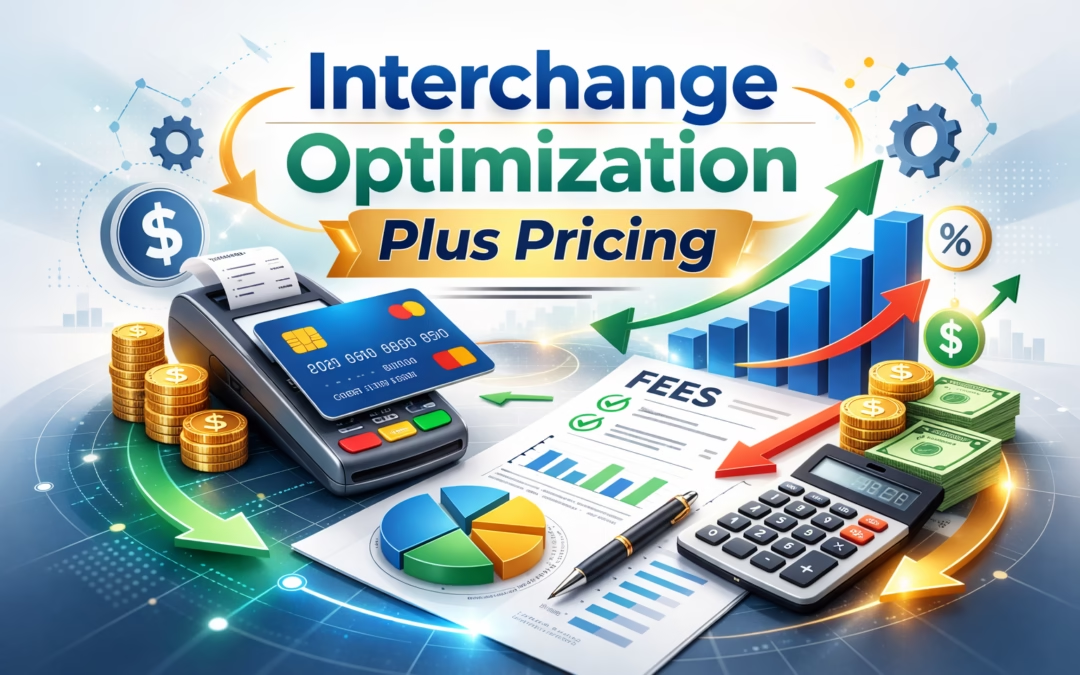
Payment processing fees can significantly impact a business’s profitability. Many companies accept credit and debit card payments daily, yet few fully understand how pricing models affect their costs. One of the most transparent and cost-effective pricing structures used in payment processing today is Interchange Optimization Plus Pricing to reduce transaction costs. This article explains what it means, how it works, and why it matters for businesses.
What Is Interchange Plus Pricing?
Interchange Plus Pricing is a payment processing model where businesses pay the actual fee set by card networks plus a fixed markup from the payment processor. The Interchange Fee is the cost charged by the bank that issued the customer’s card, while the “plus” portion represents the payment processor’s service fee.
For example, if the fee for a transaction is 1.8% and the processor markup is 0.3%, the total processing fee becomes 2.1% plus a small per-transaction cost. Unlike flat-rate pricing models, it clearly separates each cost component. Merchants are better able to comprehend exactly what they are spending for each transaction because of this transparency.
Understanding Interchange Fees
They are determined by credit card networks such as Visa, Mastercard, and other card associations. These costs change based on several variables, such as:
Type of card used (debit, credit, rewards card)
Transaction method (online, in-store, or mobile)
Business category
Security and authentication details
Typically, it ranges between 1% and 3% of the transaction value, although it can differ depending on the card and transaction type. These fees make up the largest portion of Payment Processing Costs, often representing about 80% of total card acceptance expenses. Because these are set by card networks, payment processors cannot change them. However, by interchange optimisation, companies can lower these expenses.
What Is Interchange Optimisation?
Interchange optimisation refers to the process of adjusting transaction data and payment processing methods to qualify for lower interchange rates.
Credit card networks categorise transactions into hundreds of interchange rate categories. By providing more detailed transaction information and following certain processing rules, businesses can qualify for the lowest possible rates.
For example, merchants may reduce their costs by:
Submitting Level II and Level III transaction data
Using secure payment gateways
Processing transactions quickly
Ensuring accurate billing information
Providing additional transaction details such as tax IDs, purchase order numbers, and customer codes can help merchants qualify for better categories. Businesses that successfully optimise these rates can often reduce payment processing costs by 20–40 basis points, which can result in significant savings at scale.
How Interchange Optimisation Plus Pricing Works
When it is combined with plus pricing, the result is a highly transparent and cost-efficient payment structure.
The process typically works as follows:
A customer makes a card payment.
The payment processor is used to process the transaction.
The processor passes the exact interchange fee from the card network.
A fixed markup (“plus”) is added by the processor.
Optimisation techniques help the transaction qualify for the lowest possible interchange category.
This model ensures businesses only pay the actual cost of the transaction plus a predictable processor fee.
Key Benefits for Businesses
1. Transparent Pricing
One of the biggest advantages of it is transparency. Businesses can clearly see how much they are paying in fees and how much goes to the payment processor.
This eliminates hidden charges that are common in tiered or bundled pricing models.
2. Lower Processing Costs
Because businesses pay the real rate instead of a blended fee, they often save money compared to flat-rate pricing structures.
Businesses with high transaction volumes especially benefit from this pricing model.
3. Better Cost Control
With itemised transaction data and predictable processor markups, companies can better forecast their payment processing expenses and manage their cash flow more effectively.
4. Improved Data Insights
It requires detailed transaction data, which also helps businesses gain deeper insights into their payment patterns and customer behaviour.
Potential Drawbacks
While interchange optimisation plus pricing offers many advantages, it also has a few challenges.
Complex Statements: Because each transaction includes separate fees, monthly statements may be longer and more technical than flat-rate pricing models.
Variable Costs: Since these fees vary depending on card types and transaction methods, the total processing cost may fluctuate from month to month.
However, many businesses consider these trade-offs worthwhile due to the transparency and savings this model offers.
Is Interchange Plus Pricing Right for Your Business?
It is particularly beneficial for:
Medium to high-volume merchants
B2B businesses processing large payments
Companies that want transparency in processing fees
Businesses using advanced payment gateways
Large merchants often prefer this model because it allows them to verify costs, negotiate processor markups, and optimise payment processing strategies. Small businesses can also benefit, but they should ensure they understand the structure of it before adopting it.
Conclusion
Interchange optimisation plus pricing is widely considered one of the most transparent and efficient payment processing models available today. By separating it from processor markups and using optimisation strategies, businesses gain greater visibility and control over their transaction costs. For companies processing a significant number of card payments, this approach can lead to meaningful savings, improved financial planning, and better insight into payment operations.
Running a retail store requires speed, efficiency, and reliability at every step of the customer journey. From the moment a customer walks into your store to the final checkout, every interaction plays a crucial role in shaping their experience. Whether you manage a boutique, electronics shop, clothing store, or a multi-location retail chain, having a fast, secure, andflexible Payment Processing Services is essential for smooth operations and increased sales.
At SelectivePay, we provide advanced Retail Merchant Services and Credit Card Processing Solutions designed specifically for modern retail businesses. Our goal is to help you accept payments seamlessly, reduce payment friction, prevent chargebacks, and create a better checkout experience for your customers, both in-store and online.
With evolving customer expectations and the rise of digital payments, retailers need a payment solution that keeps pace with technology while remaining easy to manage.
What We Offer Retail Businesses
Retail businesses face unique challenges such as high customer traffic, seasonal demand fluctuations, inventory management, and the need for quick transactions. Our retail payment processing solutions are built to handle these challenges while improving operational efficiency.
Retail Credit Card Processing
Accepting multiple payment methods is no longer optional; it’s a necessity. With our Retail Credit Card Processing Solutions, you can accept all major credit and debit cards with ease.
Our systems support multiple payment methods, including:
Chip card payments
Contactless tap payments
Magnetic stripe swipe
Mobile wallets such as Apple Pay and Google Pay
We also offer transparent pricing and competitive processing rates, helping retailers reduce costs while delivering a smooth payment experience.
Advanced Point-of-Sale (POS) Systems
A modern POS system does much more than process transactions. It acts as the central hub for your retail operations.
Our POS systems help retailers:
Process payments quickly
Track real-time inventory
Monitor daily sales and revenue
Manage product catalogs
Collect valuable customer insights
With an intuitive interface and easy integration, our POS solutions help retailers streamline operations while improving checkout efficiency.
Contactless & Mobile Payments
Customers today expect fast and convenient payment options. Long checkout lines can lead to frustration and lost sales.
Our contactless payment solutions allow retailers to accept:
Tap-to-pay cards
QR code payments
Mobile wallet transactions
Portable mobile card readers
This flexibility allows your business to provide a faster and safer checkout experience while meeting the expectations of modern shoppers.
eCommerce Payment Integration
Retail is no longer limited to physical stores. Many retailers now operate through a combination of brick-and-mortar stores and online platforms.
This allows retailers to manage both online and in-store Payments from a single system, creating a unified omnichannel experience for customers.
Gift Card & Loyalty Programs
Customer retention is just as important as acquiring new customers. Our Gift and Loyalty Card Programs help retailers increase repeat purchases and strengthen customer relationships.
With our solutions, you can:
Offer custom-branded gift cards
Create reward-based loyalty programs
Encourage repeat visits and higher spending
Track customer purchase behavior
These tools not only enhance the shopping experience but also help retailers build long-term brand loyalty.
Chargeback Prevention Tools
Fraud and payment disputes can negatively impact retail businesses. Chargebacks not only result in lost revenue but can also affect your payment processing reputation.
These tools help retailers reduce fraud risks and maintain secure payment environments.
24/7 Customer Support
Retail businesses operate beyond traditional business hours, and payment issues can occur at any time. That’s why we provide 24/7 US-based Customer Support.
Our experienced support team is always available to assist with:
Technical issues
Payment processing inquiries
POS troubleshooting
System setup and optimization
With reliable support, retailers can focus on running their business while we handle the payment infrastructure.
Why Retailers Choose Vecter
Retailers choose Vecter because our solutions are designed specifically for the retail environment.
Built for Retail
Every feature we provide is designed with retailers in mind. From inventory synchronization and real-time reporting to customer data insights, our systems help businesses operate more efficiently.
Simple Onboarding Process
Getting started with Vecter is quick and straightforward. We offer:
Guided setup and installation
Pre-configured payment terminals
Dedicated onboarding assistance
This ensures that your business can start accepting payments without delays.
Data-Driven Business Insights
Access to sales data is critical for making informed business decisions. Our systems provide Powerful Analytics Tools that allow retailers to:
Track product performance
Monitor peak sales hours
Identify customer buying patterns
These insights help retailers optimize pricing, inventory, and marketing strategies.
PCI-Compliant & Secure
Security is a top priority when it comes to payment processing. Our systems follow strict PCI Compliance Standards, ensuring that both your business and customer data remain protected.
We also implement advanced encryption and fraud prevention measures to safeguard every transaction.
Supporting All Types of Retail Businesses
Vecter proudly supports retailers across multiple industries. Whether you operate a small shop or a large retail chain, our solutions are designed to scale with your business.
We work with businesses such as:
Clothing & Apparel Stores
Electronics & Technology Retailers
Furniture & Home Goods Stores
Health & Beauty Retailers
Gift Shops & Boutiques
Sporting Goods & Hobby Stores
Bookstores & Specialty Shops
No matter your niche, our payment solutions help you accept payments reliably and improve operational efficiency.
Get Started with Retail Merchant Services That Work
The retail industry is evolving rapidly, and having the right payment processing system is essential for staying competitive. Whether you need Credit Card Processing for Retail, a modern POS system, or a unified online and in-store payment solution, Vecter has the expertise and technology to support your business. Our goal is to help retailers simplify payments, enhance customer experiences, and drive sustainable growth.