
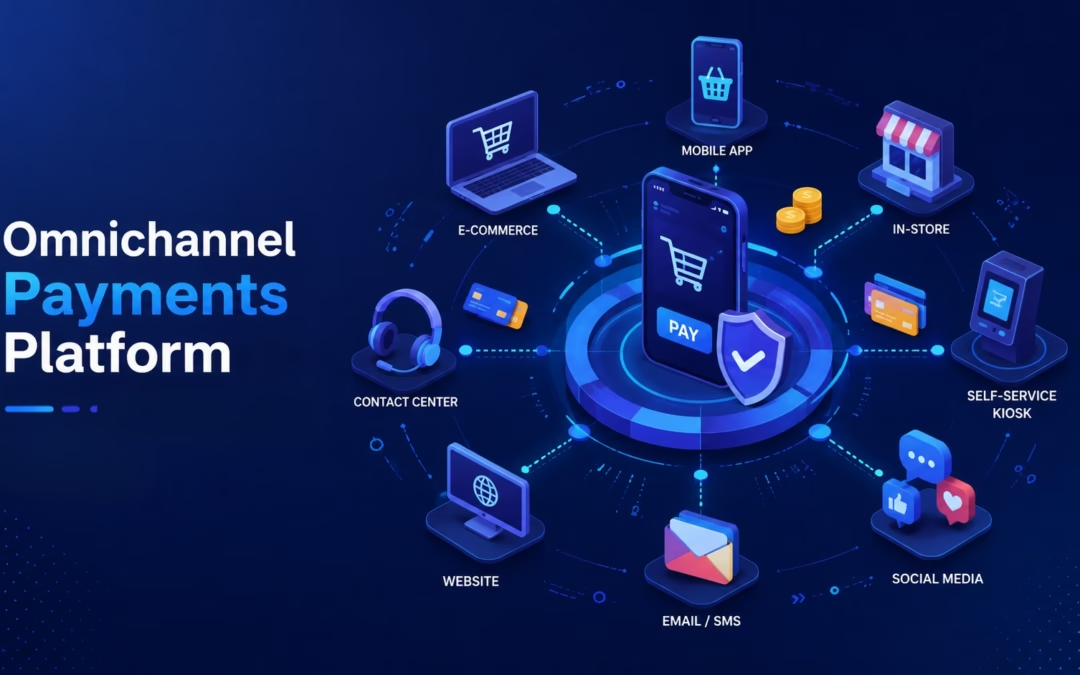
Omnichannel Payment Processing in 2026: What Merchants Should Evaluate
Businesses increasingly accept payments through multiple channels, including websites, mobile devices, payment links, virtual terminals, and in-person point-of-sale systems. An effective omnichannel payment strategy connects these channels through compatible processors, gateways, software integrations, and reporting tools. Selective Pay helps merchants evaluate and implement the payment technology that best fits their business model, transaction mix, and existing systems.
How Selective Pay Supports Omnichannel Payments
Selective Pay works with payment processors, gateways, point-of-sale providers, and software platforms to help merchants build a coordinated payment environment.
The appropriate setup depends on where payments are accepted, which systems the business already uses, reporting requirements, security needs, and whether transactions occur online, in person, by invoice, or through recurring billing.
Rather than requiring every merchant to use one proprietary platform, Selective Pay helps identify compatible technologies and configure a payment solution around the merchant’s operational needs.
Omnichannel Payment Capabilities
Depending on the processor, gateway, software, and hardware selected, an omnichannel payment environment may support:
- Online payments through websites, hosted checkout pages, or ecommerce integrations
- In-person payments through compatible point-of-sale systems and payment terminals
- Mobile payment acceptance using supported devices and applications
- Virtual terminal payments for telephone, mail-order, and office-based transactions
- Payment links or electronic invoices for remote customer payments
- Recurring billing and card-on-file payments when supported by the selected platform
- Centralized reporting when the connected systems provide consolidated transaction data
The value of an omnichannel setup depends on how well the selected systems work together. Merchants should evaluate whether transaction data, customer information, reporting, invoicing, recurring billing, and settlement details can be accessed consistently across the channels they use.
Available features vary by processor, gateway, software provider, and integration. Selective Pay helps merchants compare those capabilities and identify a configuration that supports their operational and reporting requirements.
What Selective Pay Helps Merchants Evaluate
- Payment Channel Compatibility
Determine whether the proposed solution supports the merchant’s required channels, including ecommerce, point of sale, mobile, virtual terminal, invoicing, and recurring payments.
- Software and Integration Requirements
Review compatibility with the merchant’s website, accounting system, ERP, point-of-sale software, or other business applications. Integration methods may include supported APIs, hosted payment pages, plugins, or direct software partnerships.
- Customer Payment Experience
Evaluate checkout flow, supported payment methods, mobile usability, payment links, stored payment credentials, and the consistency of the customer experience across channels.
- Security and PCI DSS Responsibilities
Review tokenization, encryption, hosted payment options, fraud-management tools, and how the proposed configuration may affect the merchant’s PCI DSS scope. Final compliance requirements are determined by the merchant’s acquirer and applicable payment brands.
- Reporting and Operational Visibility
Confirm what transaction, funding, settlement, chargeback, and reconciliation information is available and whether reporting can be consolidated across the selected systems.
- Funding and Settlement Expectations
Funding schedules and settlement timing vary by processor, merchant profile, transaction type, banking relationship, and underwriting terms. Merchants should review the actual funding terms associated with the proposed account rather than assume that every solution provides faster settlement.
Potential Cost and Operational Benefits
An omnichannel payment strategy may reduce unnecessary complexity when payment channels, reporting, and business systems are properly coordinated. The actual benefits depend on the merchant’s transaction mix, current processing arrangement, software requirements, and the technologies selected.
Selective Pay can review processing statements, pricing, interchange qualification, gateway fees, equipment, and integration requirements to identify areas where costs or manual processes may be improved.
Savings, funding schedules, and operational results vary by merchant and are not guaranteed. Any recommendation should be evaluated against the merchant’s current agreement, processing history, and business requirements.
Building the Right Omnichannel Payment Strategy
The best omnichannel payment setup is not necessarily one platform from one provider. It is a coordinated combination of processors, gateways, software integrations, payment devices, security tools, and reporting capabilities that supports how the business actually operates.
Selective Pay helps merchants evaluate those components, identify compatibility requirements, and implement a payment environment designed around their sales channels, customers, and internal systems.
Frequently Asked Questions (FAQs)
Frequently Asked Questions
- Does Selective Pay offer one proprietary omnichannel platform?
No. Selective Pay works with payment processors, gateways, point-of-sale providers, and software platforms to help merchants assemble a compatible payment solution.
- Which payment channels can be supported?
Available channels may include ecommerce, in-person payments, virtual terminals, mobile payments, payment links, electronic invoicing, card-on-file transactions, and recurring billing. Availability depends on the selected processor, gateway, software, and merchant account configuration.
- Can Selective Pay integrate with an existing business system?
Selective Pay can review compatibility with websites, accounting systems, ERPs, point-of-sale software, and other applications. Integration options depend on the APIs, plugins, hosted payment pages, and partnerships supported by the selected technology providers.
- Can transaction reporting be consolidated?
Some platforms can consolidate reporting across multiple payment channels, while others require separate portals or reports. Selective Pay helps merchants evaluate what transaction, funding, settlement, and reconciliation information will be available.
- Will an omnichannel setup reduce processing costs?
It may create opportunities to improve pricing, interchange qualification, workflow, or reporting, but results vary. Selective Pay reviews the merchant’s current processing arrangement and operational requirements before recommending changes.